

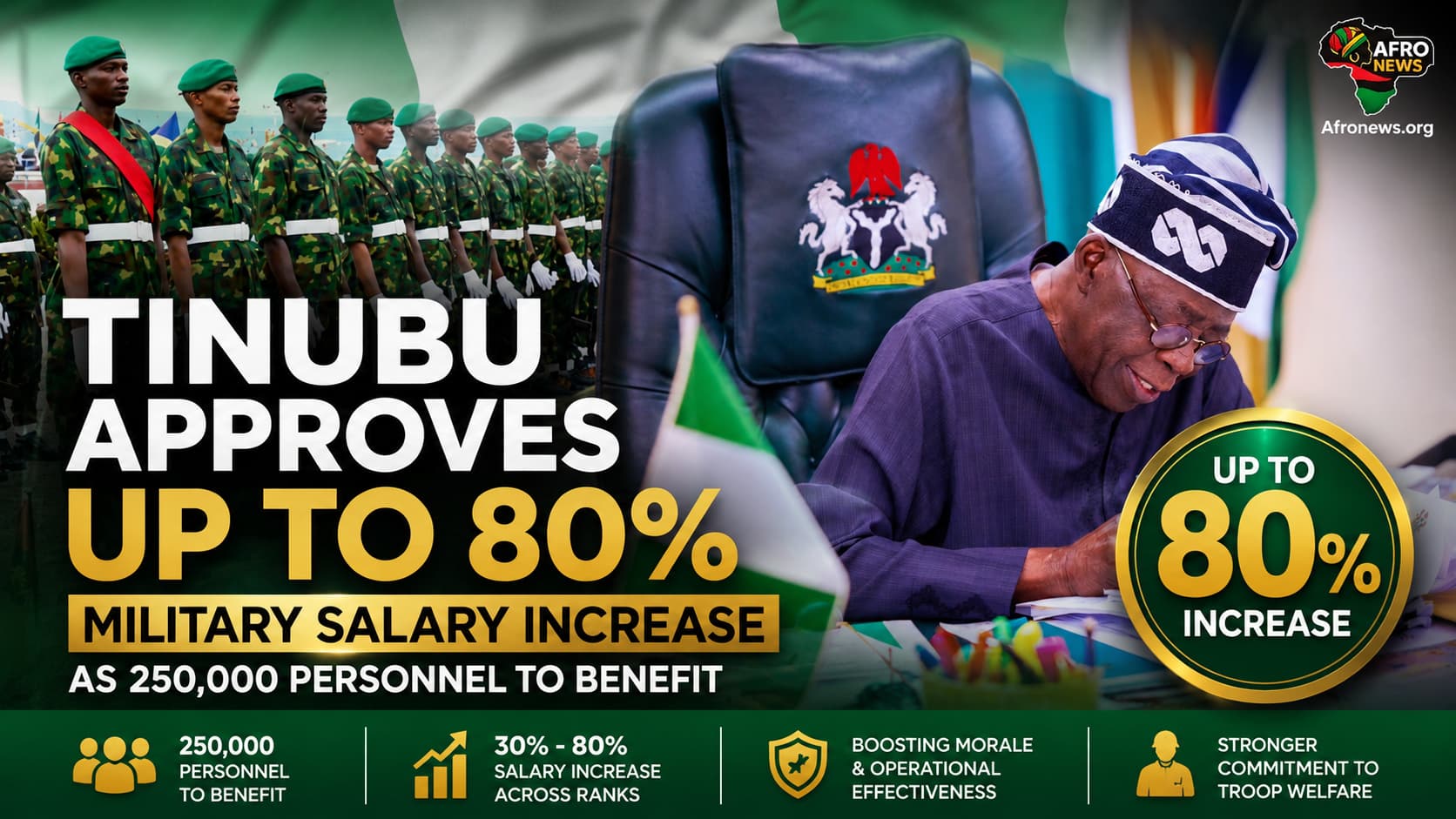
President Bola Ahmed Tinubu has approved a sweeping salary increase for members of Nigeria’s Armed Forces, with junior military personnel receiving pay rises of up to 80 percent in what is being described as one of the most significant welfare packages for the military in recent years.
The new salary structure, which takes effect from September 1, 2026, will benefit approximately 250,000 personnel across the Nigerian Army, Navy and Air Force.
According to a statement issued on Tuesday by the President’s Special Adviser on Information and Strategy, Bayo Onanuga, the salary review varies according to rank.



Under the new package:
- Officers above the rank of Colonel—including Brigadier Generals, Major Generals, Lieutenant Generals and Generals—will receive a 30% salary increase.
- Personnel from the rank of Colonel down to Warrant Officer will enjoy a 50% increase.
- Soldiers from the rank of Private to Staff Sergeant will receive the highest adjustment, with an 80% salary increase.
The Presidency said the new pay structure will increase the Armed Forces’ annual wage bill from ₦660 billion to ₦924 billion, reflecting the government’s renewed investment in troop welfare.
Announcing the decision, Onanuga said President Tinubu approved the salary review in recognition of the sacrifices made by military personnel battling terrorism, banditry, kidnapping and other security threats across the country.
“The men and women who help to keep us safe in our homes must be supported and appreciated in the course of their duties to our nation,” the President said.
Tinubu added that his administration would continue to prioritise the welfare of troops while investing in modern weapons, intelligence capabilities and technological equipment needed to combat Nigeria’s evolving security challenges.
“Our administration believes that no nation can achieve greatness without security. We therefore remain resolute in mobilising all military and law enforcement assets to eliminate security threats and protect the lives and property of all Nigerians.
“I urge our servicemen to take our gesture as a sign of our deep appreciation of the services they render to our fatherland. Together we shall prevail over the enemies intent on destroying the fabric of our nation.”
Political Reactions and Public Debate
The salary increase has generated mixed reactions among political observers and security analysts.
Some critics argue that the timing of the announcement is politically significant, suggesting it could be aimed at strengthening loyalty within the military amid recurring concerns over coup plots in parts of West Africa and to bolster public support ahead of future electoral contests. However, no evidence has been presented by the government linking the salary review to such considerations.
Supporters of the administration have dismissed those claims, insisting the pay rise is long overdue given the enormous sacrifices made by Nigerian troops. They argue that successive governments failed to adequately improve military welfare despite years of intensified operations against Boko Haram, Islamic State West Africa Province (ISWAP), armed bandits and kidnappers.
Many have praised President Tinubu for placing greater emphasis on soldiers’ welfare, noting that improved remuneration complements ongoing investments in military hardware, training and operational capabilities.
Why the Salary Increase Matters
Security experts say improved military welfare could deliver several benefits, including:
- Improved morale and motivation among serving personnel.
- Better financial security for soldiers and their families.
- Stronger recruitment and retention of skilled personnel.
- Reduced temptation for corruption and other unethical practices.
- Greater operational effectiveness in counter-terrorism and anti-banditry operations.
- Enhanced professionalism and commitment across the Armed Forces.
The salary review comes as Nigeria continues to intensify military operations against terrorist groups, armed bandits and criminal gangs operating in different parts of the country, with the government reiterating that improving troop welfare remains central to its national security strategy.
References
- The Presidency of Nigeria (Official statement by the Presidency)
- Presidential spokesman Bayo Onanuga (Official X account)
- Federal Ministry of Defence Nigeria
- Nigerian Armed Forces Headquarters