
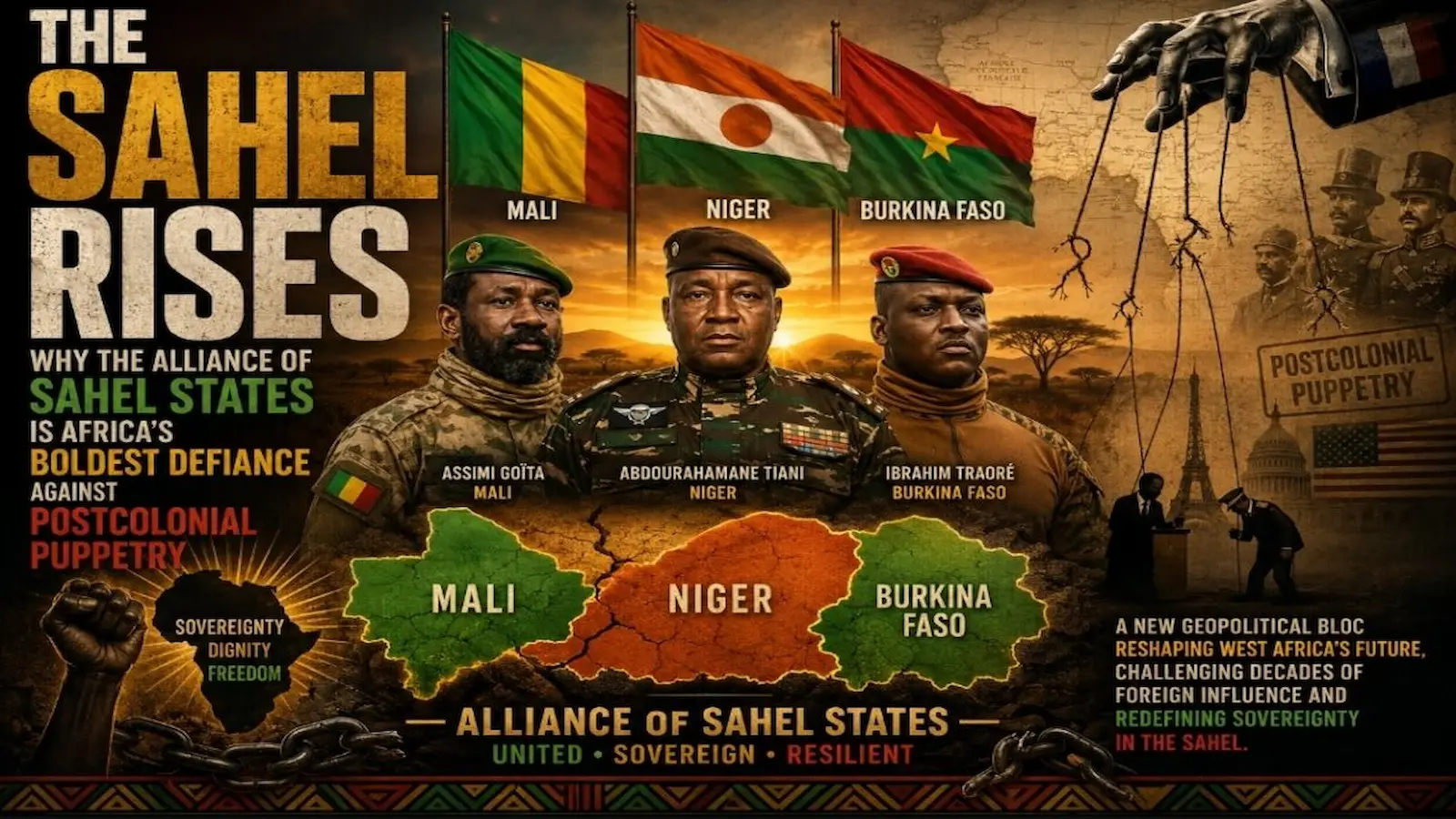
The Alliance of Sahel States (AES), established by Burkina Faso, Mali, and Niger, represents a turning point in Africa’s pursuit of genuine independence, collective security, and economic sovereignty. Far from a rebellious union of military juntas, the AES emerges as a principled resistance against failed regional structures like ECOWAS and the enduring shadow of French neocolonialism. This paper critically examines the socio-political and economic contexts that gave rise to the AES, offering practical evidence to support its relevance, necessity, and bold reimagining of African agency. Through a Pan-African lens, the AES is framed not as a breakaway coalition, but as a strategic correction anchored in self-determination, mutual defense, and a new vision for postcolonial Africa.
Introduction: The Dawn of a Defiant Sahel
There are moments in history when small nations, long overlooked, become the lodestars of great transformation. The formation of the Alliance of Sahel States (AES) by Mali, Niger, and Burkina Faso is one such moment. Rooted in the turbulent soil of insurgency, coups, and regional disillusionment, the AES stands as a defiant and necessary evolution. At its core, it is not merely a military pact but a revolutionary declaration of sovereignty, born of necessity, fed by frustration, and aimed at liberation.This union created through the signing of the Liptako-Gourma Charter in September 2023, reorients the region’s political and security trajectory away from externally dictated prescriptions, toward a Sahelian-driven alternative grounded in shared values and common threats.
The Historical Context: From Liberation to Lost Autonomy
Africa’s journey since the mid-20th century has been defined by a paradox: political independence without economic and military sovereignty. Nowhere has this been more evident than in the Sahel. Despite formal decolonization, nations like Mali, Niger, and Burkina Faso remained entangled in exploitative arrangements, particularly with France, their former colonizer.Take Niger’s uranium exports as a case in point. Though Niger is the seventh-largest producer of uranium globally, much of its wealth has powered French homes, while 80% of Niger’s population remains without electricity. This scandalous disparity illustrates the economic subjugation that AES seeks to correct. Politically, the lingering influence of Paris through defense agreements, language, currency (notably the CFA franc), and military presence (such as Operation Barkhane) has reduced these nations to security “clients” of the West. Yet, this foreign military assistance has failed to secure peace, with terrorism escalating, not diminishing, under foreign watch.
Related Post



Why the Existing Regional Order Failed the Sahel
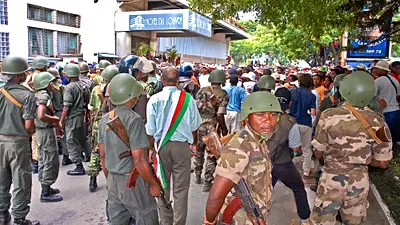
The Economic Community of West African States (ECOWAS), which once promised unity, security, and economic cooperation, has steadily lost credibility particularly in the Sahel. Its selective application of “democratic standards” has drawn criticism. When Mali’s military overthrew its government in 2021 amid mass protests against insecurity and corruption, ECOWAS responded with harsh sanctions. The same punitive approach was applied to Burkina Faso (2022) and Niger (2023). Yet the bloc remained mute on electoral malpractice, corruption, and repression in some of its “democratic” member states, raising the question: is ECOWAS a union of African peoples or a gatekeeper for Western interests?
Furthermore, ECOWAS’s threat to use military force in Niger following the 2023 coup exposed its double standards. While violence continues in the eastern DRC or in Cameroon, ECOWAS has never threatened intervention. But when Niger attempted to chart an independent path, the call for war came swiftly.This context reveals why the Sahel needed its own alliance, an alliance not beholden to foreign funders or double-tongued diplomacy. The AES is, in this sense, a structural correction to an order that repeatedly marginalized Sahelian voices and ignored local contexts.
The Alliance of Sahel States: A Blueprint for Security, Sovereignty, and Solidarity
The Alliance of Sahel States is grounded in three strategic pillars: collective security, economic sovereignty, and political solidarity.
On security, AES nations have borne the brunt of jihadist violence, especially from groups affiliated with Al-Qaeda and ISIS. With porous borders and scattered counter-terrorism efforts, these countries became fragmented battlefields. Under AES, the three states are coordinating joint military operations, sharing intelligence, and conducting border patrols. For example, in December 2023, combined AES forces launched a unified campaign across the Liptako-Gourma region, reclaiming territory previously held by insurgents and showcasing the strength of regional collaboration absent Western interference.
Economically, the AES represents a movement toward resource control and the end of predatory extraction. In 2023, Niger’s transitional government announced a review of mining contracts with French and Canadian firms. Mali, in parallel, intensified local gold refining efforts to retain more revenue in-country. Burkina Faso, under Captain Ibrahim Traoré, championed agrarian reform and national food self-reliance, breaking the dependency on overpriced foreign imports.
Politically, AES provides a diplomatic safe haven for member states facing ECOWAS isolation. But more than that, it represents a common ideological pivot: rejecting external control, embracing Pan-African cooperation, and building institutions responsive to local needs rather than donor templates. The alliance is not necessarily anti-Western, it is anti-subjugation, rejecting unequal partnerships while being open to fair cooperation.
Popular Legitimacy and Grassroots Endorsement
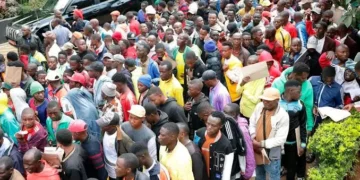
Contrary to elite narratives in Western media, the AES has massive grassroots support. In Niamey, Ouagadougou, and Bamako, AES flags fly proudly. Citizens have volunteered by the thousands to join security initiatives. In Burkina Faso, over 90,000 civilians signed up as “Volunteers for the Defense of the Homeland”, showcasing the alliance’s capacity to unify people around a shared sense of purpose and patriotism.This widespread support reflects a deep disillusionment with old systems and an appetite for bold, locally driven alternatives rather than viewing these transitions as regressive, many Africans see them as a long-overdue realignment.
Global Reactions and Strategic Realignment
While ECOWAS condemned the AES, and Western capitals wrung their hands over democracy, the geopolitical tides are shifting. AES states have forged new partnerships with Russia, China, Turkey, Iran, and Algeria not to mimic Cold War alliances, but to diversify options and escape the monopoly of Western aid and militarization. Russia has supplied military equipment and advisors to Mali and Burkina Faso. Turkey has expanded infrastructure and health investments in Niger. Algeria, a regional power with its own anti-colonial legacy, is emerging as a critical backer of Sahelian sovereignty. These shifts underscore the AES’s commitment to non-alignment, strategic independence, and continental partnerships grounded in mutual respect.
Conclusion: The Alliance Africa Didn’t Know It Needed
The Alliance of Sahel States is not perfect, no revolutionary act ever is. But it is necessary. In challenging ECOWAS’s passivity, France’s overreach, and Africa’s elite complacency, the AES is forcing the continent to confront hard truths: that sovereignty cannot be outsourced; that foreign troops will never protect a people like they would protect themselves; and that unity must begin where betrayal once festered. In this regard, the AES is not simply a political union. It is a philosophical reawakening, the idea that Africa can and must define its own future. The Sahel, often portrayed as a region of crisis, may now be the cradle of Africa’s second liberation. As the desert winds sweep across the Liptako-Gourma, they carry not just sand, but the seeds of a new beginning.
References
- Liptako-Gourma Charter, 2023.
- BBC Africa. “Mali, Niger and Burkina Faso form the Sahel security alliance.” (2023)
- Al Jazeera. “Why ECOWAS Threatened Military Action in Niger.” (2023)
- Africanews. “Burkina Faso Expels French Troops.” (2023)
- Sankara, T. (1987). Speech on Economic Sovereignty.
- United Nations Sahel Reports, 2021–2023.
- PLO Lumumba. “Africa Must Reclaim Her Sovereignty.” (Public Lecture, Accra, 2022)