

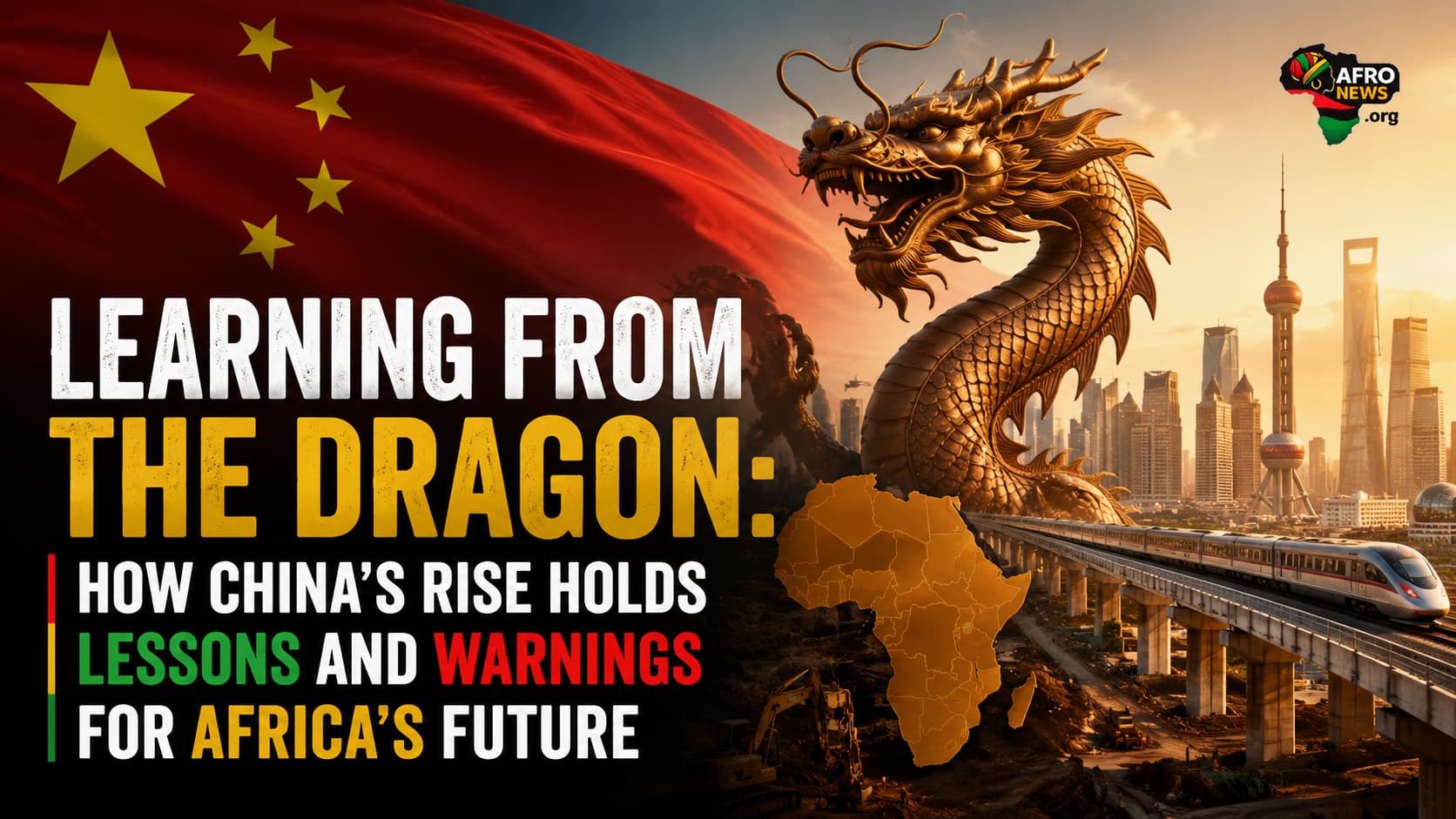
“The thing to learn from China is during our lifetime the Chinese through their ingenuity have succeeded in lifting nearly 800 million people out of poverty, they know what they want.” PLO Lumumba
Professor PLO Lumumba’s piercing analysis of China’s rise is both a call to admiration and a cautionary tale for Africa. In his characteristic eloquence, he points to China as a model from which there is much to learn but also a strategic player whose growing global footprint could become a threat if African nations continue to drift without vision. Indeed, in a continent marred by short-termism, policy somersaults, and externally-driven agendas, the example of China’s long-term planning, strategic discipline, and developmental consistency stands as a mirror for Africa’s leadership.
China’s Mastery: 800 Million People Lifted Out of Poverty
The sheer scale of China’s poverty reduction success is unprecedented. According to the World Bank (2022), China’s targeted reforms since the late 1970s under Deng Xiaoping’s “Reform and Opening-Up” policy led to an economic miracle that lifted over 800 million people out of extreme poverty. This was achieved through a blend of state-directed capitalism, infrastructure investment, mass education, and rural industrialization. From a country mired in famine and backwardness, China is now the world’s second-largest economy.
What’s crucial here is not just the result but how China achieved it. The Chinese Communist Party maintained a 50-year vision, planned and implemented policies in five-year increments, and heavily invested in human capital development, innovation, and infrastructure. Their state capacity, combined with centralized long-term planning, ensured policy consistency and national discipline. In Africa, most governments are trapped in electoral cycles, unable or unwilling to sustain development agendas beyond five-year terms. Grand visions are announced but abandoned with each change in leadership. Africa doesn’t suffer from a lack of plans, it suffers from a lack of commitment to the long haul.
Related Post




The Chinese Are Everywhere, Because They Know What They Want
From Lusaka to Lagos, from Dakar to Djibouti, China’s presence in Africa is unmistakable. Through the Belt and Road Initiative (BRI), China has invested over $150 billion in African infrastructure, from railways in Kenya to highways in Ethiopia and power projects in Angola. The Export-Import Bank of China has become the largest bilateral lender to African countries, surpassing the World Bank in infrastructure financing. But this growing footprint is not charity, it is strategy. In 2017, China established its first overseas military base in Djibouti, on the Horn of Africa. Meanwhile, many of the infrastructure projects funded by Chinese loans are collateralized, putting African assets at risk in case of default. Sri Lanka’s handover of the Hambantota Port to China in a 99-year lease after failing to repay loans should serve as a wake-up call to African nations. China knows what it wants: markets, resources, political alliances, and global influence. The question is, what does Africa want?
What Africa Can and Must Learn
• Clear National Vision and Leadership Discipline
China’s success stemmed from long-term national planning. African countries must adopt a generational mindset to development. Rwanda’s Vision 2050 or Ghana’s Coordinated Programme of Economic and Social Development Policies are good starts but must be shielded from political disruption. A non-partisan national development framework, anchored in law, is key.
• Investment in Human Capital and Technology
China invested massively in education, producing the world’s largest pool of engineers, scientists, and skilled workers. Africa must close its education deficit and embrace STEM, vocational training, and innovation. Kenya’s Konza Technopolis and Nigeria’s tech hubs in Lagos and Abuja are promising, but scale and consistency are still lacking.
• Industrialization and Value Addition
While Africa exports raw materials, China imports them to manufacture high-value goods. For Africa to compete, it must industrialize. Ethiopia’s industrial parks model, focused on garment and leather exports, provides a blueprint. Africa must stop exporting jobs and wealth.
• Infrastructure as Foundation for Growth
China built over 40,000 kilometers of high-speed rail in under two decades. Africa’s infrastructure gap remains a $170 billion annual deficit (AfDB, 2021). Leveraging Public-Private Partnerships (PPPs) and intra-African financing (via AfCFTA and African Development Bank) will be critical.
• Continental Unity and Regionalism
China acts as one. Africa is 54 fragmented states. A United States of Africa remains a dream, but stronger regional blocs like ECOWAS, EAC, and SADC must integrate economically and politically. The African Continental Free Trade Area (AfCFTA) is a powerful tool but only if implemented seriously.
The Danger: Neo-Colonialism in New Colours
Lumumba’s warning is timely. Without strategy, Africa risks becoming a pawn in China’s global chessboard. Debt dependency, resource extraction, and technological surveillance (as seen in Huawei-related controversies) could entrench a new form of neo-colonialism, economic rather than military. Africa must negotiate with China from a position of strength, not desperation. Zambia’s debt crisis, where Chinese loans constituted a significant portion, is a reminder of the peril of unguarded borrowing. Transparency, due diligence, and independent oversight of Chinese deals are non-negotiable.
Conclusion: Know What You Want
PLO Lumumba’s words are a wake-up call to Africa’s leaders and youth. China succeeded not because of aid, but because it knew what it wanted and executed with ruthless discipline. Africa must craft its own path not copy China blindly, but internalize the values of self-reliance, strategic planning, and national pride. Africa’s salvation lies not in Beijing, Brussels, or Washington but in Accra, Addis Ababa, Abuja, and every other African capital. Africa must rise on her terms, in her time, and with her own tools.