
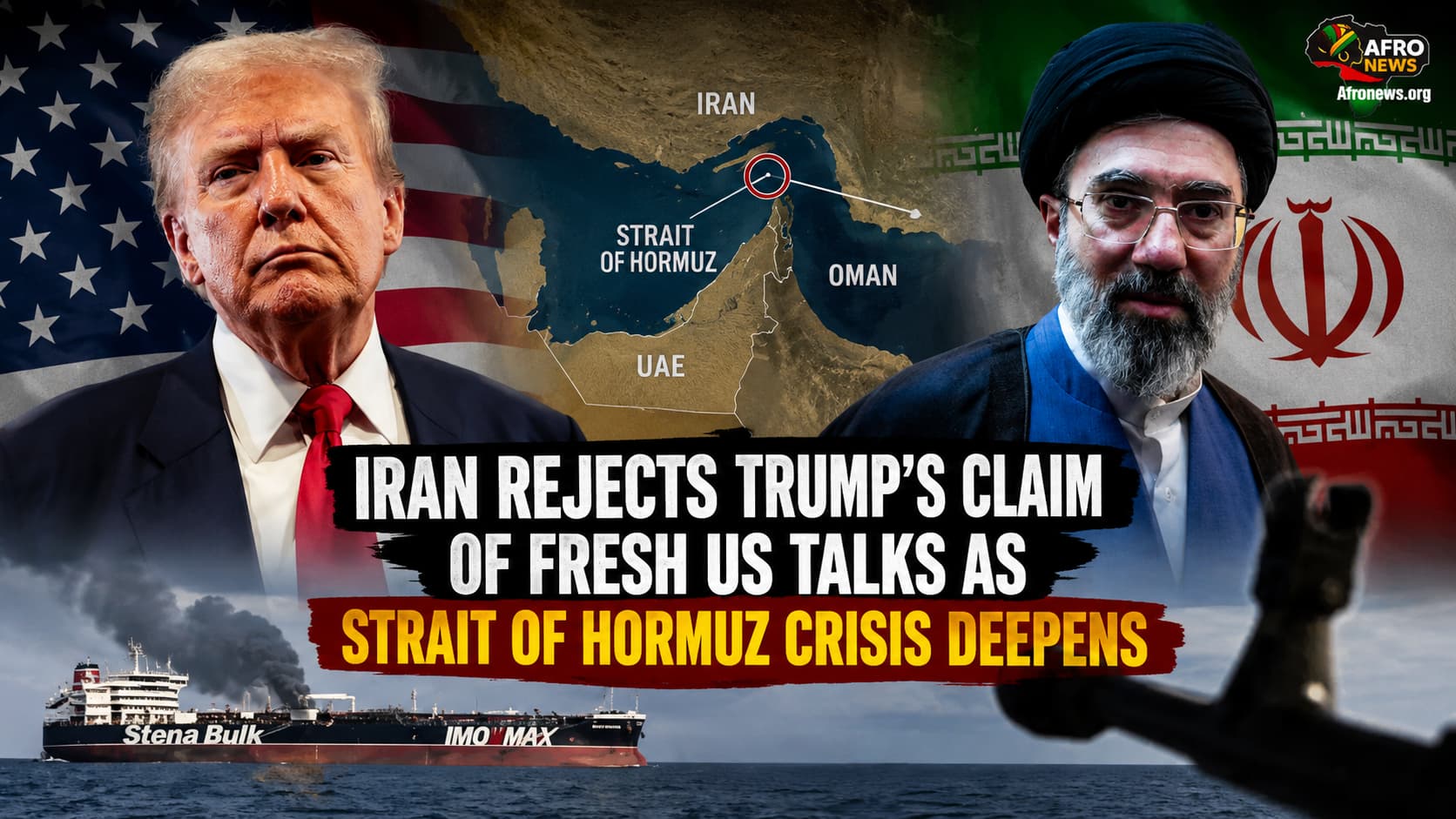
Iran has dismissed claims by US President Donald Trump that fresh negotiations between Washington and Tehran are underway, insisting no direct talks are taking place as the conflict between the two nations enters its sixth month.
The sharp denial came after Trump announced that a new round of negotiations would begin on Monday, saying he had delayed planned military strikes against Iran to allow diplomacy another chance.
Speaking during a weekly press briefing, Iranian Foreign Ministry spokesman Esmaeil Baqaei categorically rejected Trump’s assertion.



“We are not currently negotiating with the United States. Our negotiations are with Oman to secure passage through the Strait of Hormuz,” Baqaei said.
The conflicting statements underscore the deep mistrust between both sides despite repeated claims by Washington that diplomacy remains possible.
Hormuz at the Centre of the Crisis
The Strait of Hormuz has emerged as the most contentious issue in the prolonged conflict, with Iran tightening its control over one of the world’s busiest energy shipping lanes.
Since the outbreak of hostilities on February 28, following coordinated US and Israeli strikes on Iranian targets, Tehran has imposed restrictions on commercial vessels transiting the strategic waterway.
Iran insists that ships use routes close to its coastline and has proposed a new maritime arrangement with neighbouring Oman that it says would respect the sovereignty and security interests of both countries.
According to Baqaei, Tehran and Muscat are close to reaching an understanding on a mutually acceptable shipping corridor. However, he stressed that such an agreement should not be interpreted as a full reopening of the Strait of Hormuz.
The waterway remains vital to global energy supplies, making any disruption a major concern for international markets.
Trump Says Diplomacy Is Back on Track
Speaking aboard Air Force One on Sunday, Trump maintained that negotiations with Iran would commence on Monday afternoon, although he declined to reveal the location or the participants involved.
The US president said discussions would focus on the Strait of Hormuz and Iran’s nuclear programme, which Washington continues to describe as a major security threat.
Trump also claimed he had suspended what he described as potentially “the biggest attack since World War II” after receiving appeals from Iran and regional allies including Saudi Arabia, the United Arab Emirates and Qatar.
Iranian state media swiftly rejected the claim that Tehran had requested Washington to refrain from launching further military action.
Fragile Diplomacy Amid Continuing Tensions
The latest disagreement comes after weeks of renewed military threats and failed diplomatic efforts.
Last week, Trump warned that the United States could strike Iran “very hard” before later suggesting that the framework for a possible agreement was already emerging.
Similar optimism has surfaced before, only for hostilities to resume.
A ceasefire agreement reached last month ultimately collapsed, despite hopes it would restore unrestricted navigation through the Strait of Hormuz and reduce tensions affecting global oil supplies.
Meanwhile, Iranian lawmaker Hassan Ghashghavi said mediators are working to revive the memorandum of understanding reached between Washington and Tehran in June, describing it as an important foundation for broader peace negotiations.
“The key issue right now is the Strait of Hormuz,” Ghashghavi said, adding that discussions between intermediaries remain active.
Iranian President Masoud Pezeshkian also reaffirmed Tehran’s position, saying the country would continue pressing its adversaries to honour previous commitments.
Uncertain Path Ahead
While President Trump projects confidence that diplomacy is progressing, Tehran’s outright rejection of direct negotiations highlights the wide gap that still exists between both governments.
With military tensions persisting, shipping risks mounting in the Strait of Hormuz, and both sides offering conflicting narratives, prospects for a lasting breakthrough remain uncertain as the conflict enters another critical phase.