

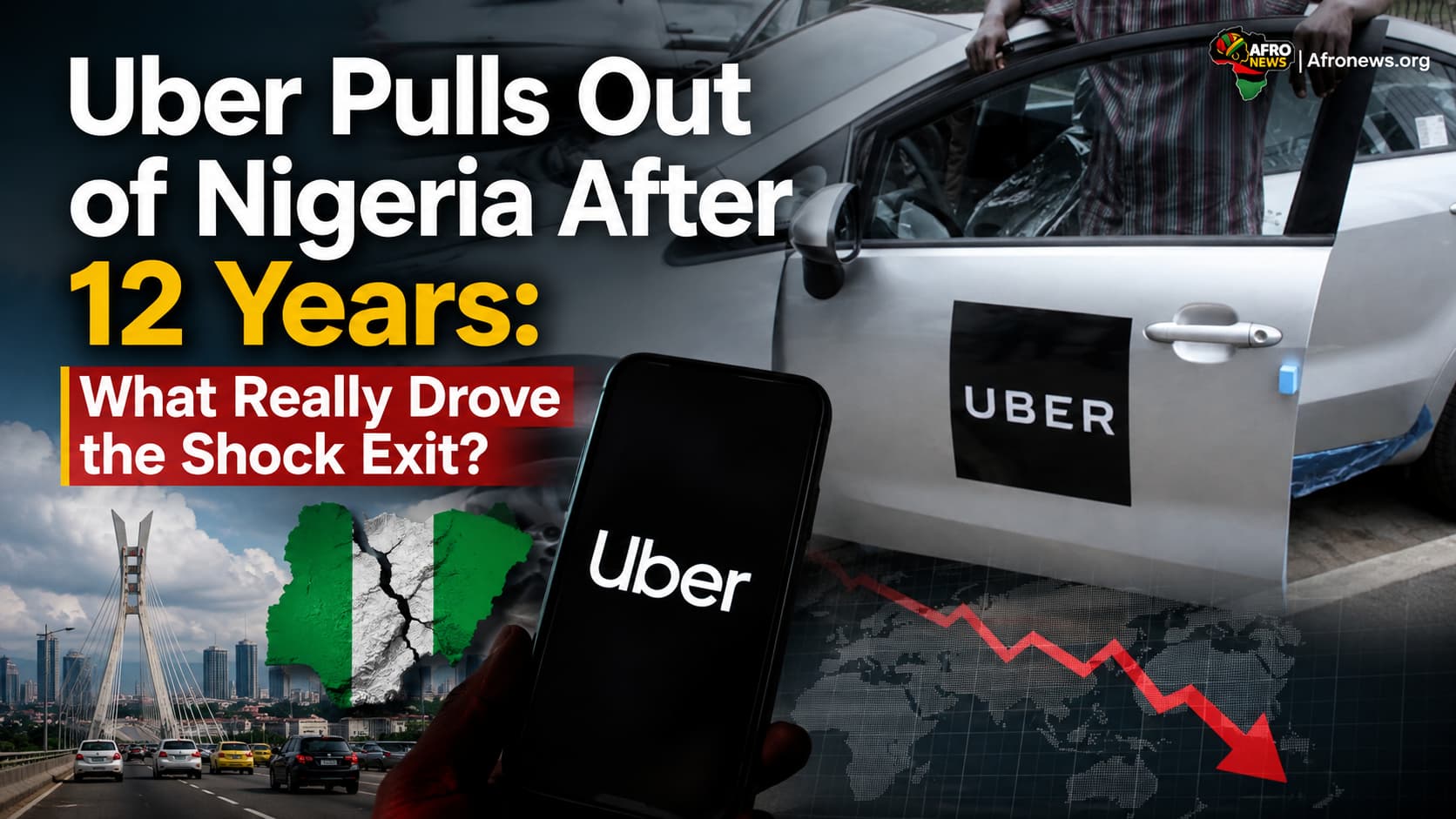
Global ride-hailing giant Uber is pulling the plug on its operations in Nigeria and Uganda, with the withdrawal taking effect Wednesday, September 2, 2026, in a decision that could reshape Nigeria’s increasingly competitive e-hailing market.
Uber confirmed the move after what it described as a “thorough review”, saying the decision is restricted to Nigeria and Uganda and will not affect its operations in other African markets. The company said its immediate priority is to support drivers, riders and local employees through the transition.
The exit brings an end to 12 years of Uber’s presence in Nigeria. The company entered the Nigerian market in 2014 and became one of the pioneers of app-based ride-hailing, helping to change how millions of Nigerians moved around major cities.
Related Post




Why Nigeria? The unanswered question
Uber has not publicly provided a detailed explanation for why Nigeria and Uganda were singled out.
That omission is already raising questions in Nigeria, particularly because the announcement comes at a time when the country’s e-hailing industry is facing mounting regulatory, operating and cost pressures.
Nigeria is an extremely large potential market, but operating profitably in the country can be complicated by high vehicle-maintenance costs, fuel expenses, inflation, currency volatility, regulatory requirements and intense competition.
For drivers, the economics of the business have also become increasingly difficult. The cost of keeping a vehicle on the road has risen sharply, while drivers must balance fuel, maintenance, insurance, permits, platform commissions and increasingly congested roads against what riders are prepared to pay.
Uber’s own Nigerian driver requirements, for example, include vehicle inspection, insurance, roadworthiness certification and a valid Hackney Permit.
A curious timing: Uber’s global restructuring
The Nigerian announcement also coincides with a major restructuring at Uber globally.
The company announced plans to cut approximately 3,300 jobs about 10% of its global workforce as it simplifies its organisational structure and seeks to redirect resources towards future growth areas, including autonomous-vehicle technology.
That does not establish that the Nigerian exit is directly connected to the global layoffs. Uber has not said so.
However, the timing raises a legitimate business question: is the withdrawal part of a broader strategy to concentrate Uber’s capital and management resources on markets and technologies with stronger returns?
That possibility cannot yet be confirmed, but it is likely to fuel speculation among industry observers.
Nigeria’s regulatory environment also deserves scrutiny
The announcement comes barely days after controversy surrounding e-hailing operations at Nigerian airports.
The Federal Airports Authority of Nigeria (FAAN) recently introduced the Airport Car Hire Rank Management System (ACHRAMS), saying commercial transportation providers operating within airport premises need a framework that provides visibility over drivers and vehicles and strengthens passenger safety and security.
FAAN subsequently reached an operational agreement with Bolt, clearing the company to resume services at FAAN-managed airports. Discussions with other e-hailing operators were still ongoing at the time.
FAAN has insisted that it did not ban Uber or Bolt, but the episode highlighted the regulatory friction that can emerge when global technology platforms operate inside tightly controlled transportation environments.
Whether the airport dispute played any role in Uber’s broader decision remains unknown. There is currently no evidence from Uber linking its withdrawal to the FAAN situation.
Who stands to gain?
Uber’s departure could create an opening for its competitors.
Bolt, inDrive and other local and international mobility platforms could be positioned to capture riders, drivers and corporate customers previously using Uber.
But there could also be a downside for Nigerian commuters.
Uber’s presence helped create competition in the ride-hailing sector. Its withdrawal could reduce consumer choice in some locations and potentially alter pricing dynamics if competing platforms gain greater market power.
For thousands of drivers who depended on Uber as one of their income channels, the immediate question is equally important: where do they go next?
Many are likely to migrate to rival platforms, potentially intensifying competition among drivers and platforms.
A bigger warning for Nigeria’s tech economy?
Perhaps the most significant issue is not simply that Uber is leaving.
It is why a globally recognised technology company that has operated in Nigeria for more than a decade has decided that the market no longer fits its immediate strategy.
Nigeria remains Africa’s largest population centre and one of the continent’s biggest technology markets. Yet size alone does not guarantee that a business will find the economics attractive.
Uber’s exit therefore raises a broader question about the ease of doing business in Nigeria’s rapidly expanding digital economy.
Is this simply a strategic portfolio decision by Uber?
Is it a consequence of rising operating costs and fierce competition?
Did regulatory pressures contribute?
Or is the company preparing to concentrate its resources elsewhere as it moves aggressively into autonomous mobility?
For now, Uber is not saying.
And that may make its sudden exit from Nigeria even more significant.
What happens next?
The immediate beneficiaries could be competing ride-hailing platforms, while drivers and riders face a period of adjustment.
But the longer-term impact will depend on whether competitors can absorb Uber’s customers without significantly increasing fares or compromising service quality.
For Nigeria, however, the bigger conversation may have only just begun:
If Uber can leave after 12 years, what does that say about the future economics of Nigeria’s digital mobility market and which other global platforms could be asking themselves the same question?