Nigeria renews push for permanent African seats, calls for stronger global action on conflict, climate, debt and technology
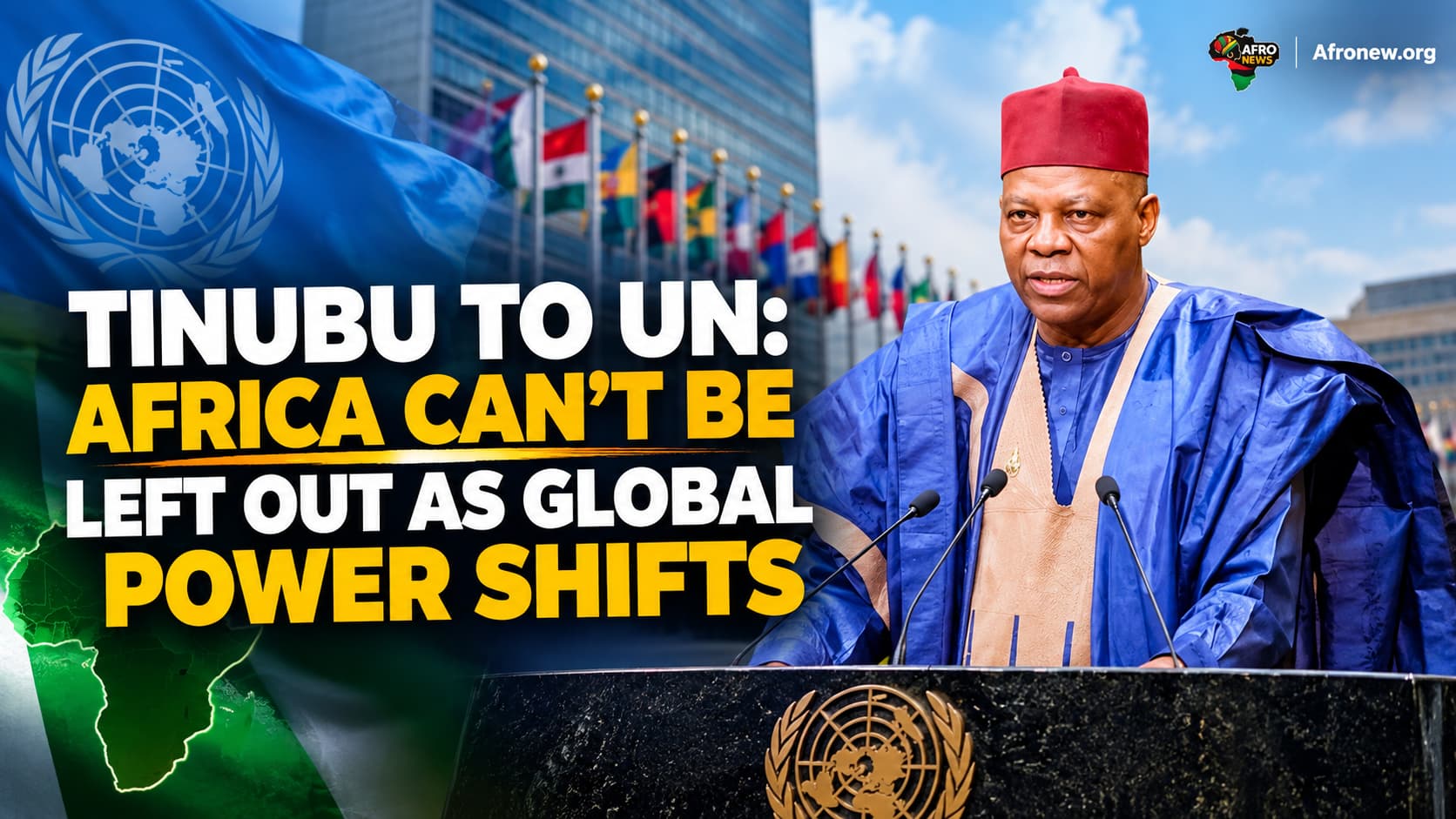
President Bola Tinubu has used Nigeria’s address to the 81st United Nations General Assembly (UNGA) to demand a major overhaul of the global order, arguing that Africa can no longer remain largely excluded from the United Nations Security Council’s permanent membership.
Tinubu’s address was delivered on Thursday in New York by Vice-President Kashim Shettima, who represented the President at the General Debate themed “Restoring Trust, Managing Transformation: A United Nations That Delivers for All.”



At the centre of Nigeria’s position was the demand for at least two permanent seats for Africa, with the full rights of permanent membership, including veto powers for as long as the veto remains part of the Council, alongside five non-permanent seats.
Tinubu argued that the UN’s current power structure still reflects the realities of 1945, rather than the geopolitical landscape of 2026.
“The world of 2026 cannot remain captive to the distribution of power in 1945.”
Nigeria’s demand is consistent with the African Union’s Ezulwini Consensus and Sirte Declaration, which call for two permanent African seats with full privileges and five non-permanent seats
Tinubu argued that the UN’s current power structure still reflects the realities of 1945, rather than the geopolitical landscape of 2026.
“The world of 2026 cannot remain captive to the distribution of power in 1945.”
Nigeria’s demand is consistent with the African Union’s Ezulwini Consensus and Sirte Declaration, which call for two permanent African seats with full privileges and five non-permanent seats.
‘PROPAGANDA MUST NOT SHIELD PERPETRATORS’
The Nigerian President also delivered a strong warning about the consequences of disinformation and propaganda in conflicts.
Addressing the wars and humanitarian crises confronting the world, Tinubu said there was a danger in reaching a point where propaganda could obscure the distinction between victims and aggressors.
He warned that when propaganda shields perpetrators from accountability and makes truth-telling a crime, the fundamental promise of the United Nations is undermined
Nigeria called for urgent diplomatic action over conflicts, including the war in Sudan, while insisting that civilians must be protected and humanitarian access guaranteed.
The President also argued that military victories alone cannot deliver lasting peace, calling for greater emphasis on dialogue, reconciliation, peacebuilding, mediation and inclusive political processes.
SECURITY BEYOND MILITARY FORCE
Drawing from Nigeria’s experience fighting Boko Haram, ISWAP and other armed groups, Tinubu said terrorism, cyberattacks, organised crime and illicit financing increasingly operate across national borders.
He maintained that lasting security requires more than military operations, pointing to education, economic opportunity, accountable governance and protection of human rights as critical foundations for sustainable peace.
Nigeria also reaffirmed its commitment to regional peace efforts through ECOWAS, the African Union and partnerships focused on maritime security and counter-terrorism.
CLIMATE, DEBT AND AI ALSO TAKE CENTRE STAGE
Tinubu’s address extended beyond security and UN reform to the economic and technological challenges facing developing countries.
Nigeria argued that developing nations should be able to industrialise, tackle poverty and expand energy access while pursuing lower-carbon development pathways supported by technology transfer and climate financing.
The President reiterated Nigeria’s commitment to its net-zero target for 2060, while calling for reforms to the international financial system, greater access to concessional funding and debt frameworks that better reflect the development needs of poorer countries.
On artificial intelligence, Nigeria said it would not allow fear to dictate its technological future, while highlighting digital infrastructure, broadband expansion and technology entrepreneurship as areas of opportunity.
The address ultimately presented Nigeria’s case for a more representative, responsive and inclusive UN, with Africa seeking a greater role in decisions that shape global peace, security and development.
The message was clear: for Nigeria, restoring trust in multilateralism requires not only reforming institutions but also giving regions such as Africa a stronger voice within them.
Reference links
United Nations — 81st General Assembly�
Nigeria’s Security Council reform demand — Voice of Nigeria�
UNGA 81 General Debate opening remarks