
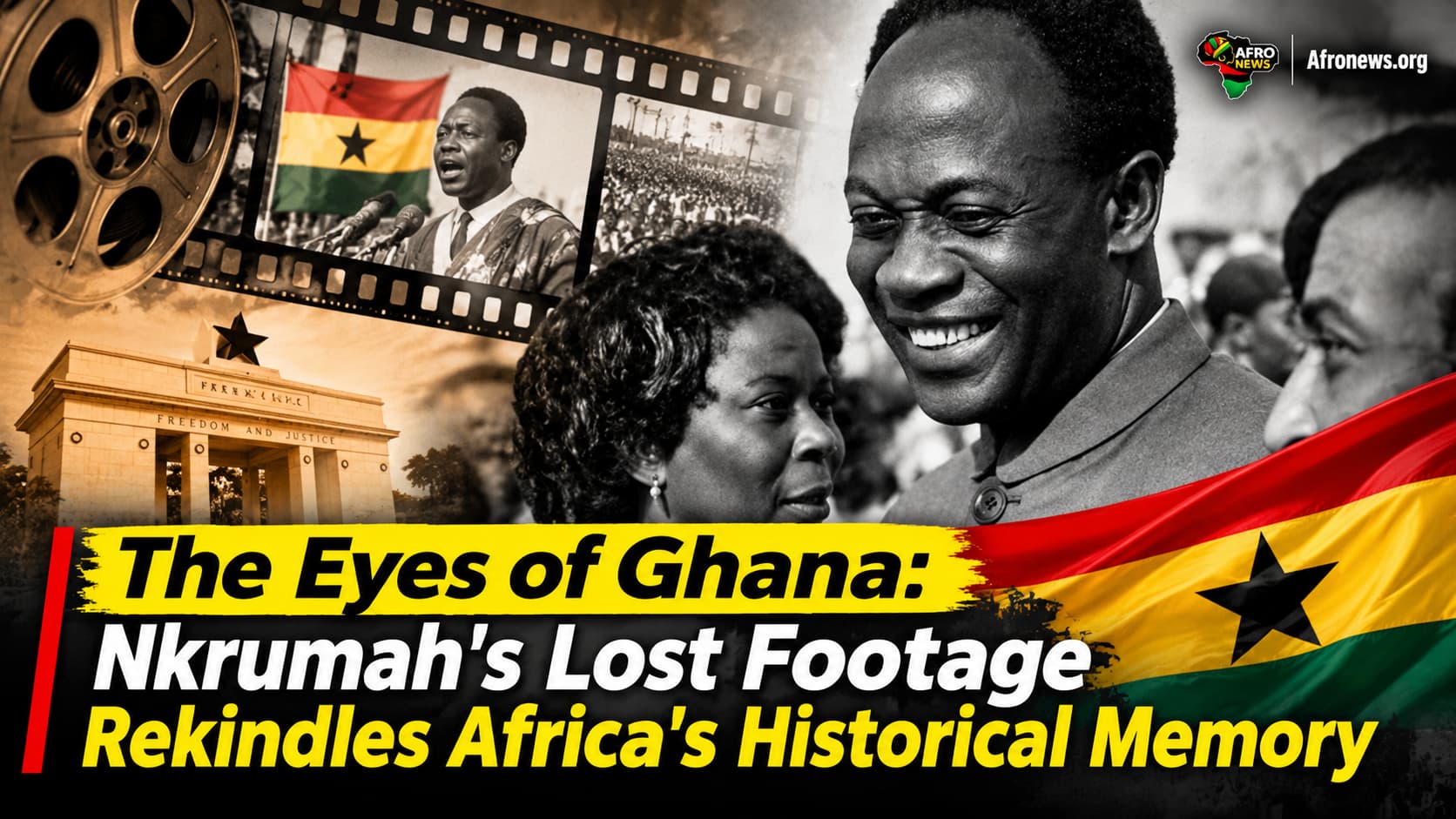
History has a way of resurfacing when a new generation needs to understand its past. For Ghana, a nation whose independence inspired a continent, the recovery of historical footage documenting the era of its first President, Dr Kwame Nkrumah, represents more than a cinematic achievement. It is an opportunity to reconnect the world with a defining chapter of African history.
That is the significance of The Eyes of Ghana, a 90-minute documentary directed by two-time Academy Award-winning filmmaker Ben Proudfoot, produced with American digital personality IShowSpeed and executive produced by former United States President Barack Obama and Michelle Obama through their production company, Higher Ground Productions.
Released free on IShowSpeed’s YouTube channel on November 17, 2026, the documentary attracted more than 1.2 million views within its first two days, demonstrating the global appetite for stories that connect history, identity and cultural heritage.
Related Post




At the heart of the production is veteran Ghanaian cinematographer Rev. Dr Chris Tsui Hesse, who served as the personal cameraman to Nkrumah and documented Ghana’s journey towards independence and the wider African liberation movement.
Following the February 1966 coup that overthrew Nkrumah, much of the footage Hesse had captured was destroyed. However, he had preserved more than 1,300 reels of historical film in London, safeguarding an extraordinary visual record of Ghana’s political history. The documentary follows his efforts to recover, restore and share this archive before it is lost.
Beyond Nkrumah: A story of African identity and independence
The documentary’s significance extends beyond the recovery of historical footage. It offers an opportunity to revisit Nkrumah’s political vision and the broader aspirations that shaped Ghana’s independence.
When Ghana attained independence on March 6, 1957, it became a powerful symbol of possibility for African countries still struggling against colonial rule. Nkrumah believed that political independence alone was insufficient without economic transformation, continental cooperation and genuine African self-determination.
His Pan-African vision remains relevant as the continent pursues the African Union’s Agenda 2063 and advances regional economic integration through the African Continental Free Trade Area (AfCFTA).
Questions about African unity, economic sovereignty and the continent’s position in global affairs remain central to contemporary development discussions. Revisiting this history allows a new generation to understand that many of today’s aspirations have deep historical foundations.
Importantly, appreciating Nkrumah’s contribution does not require overlooking the political complexities of his administration. Rather, it requires a balanced examination of his achievements, controversies and enduring influence on African political thought.
A global partnership with a powerful message
The involvement of Barack and Michelle Obama alongside IShowSpeed has given the documentary considerable international visibility.
The partnership also demonstrates the changing nature of global storytelling. Digital creators, filmmakers and established production companies can work together to introduce historical and cultural narratives to audiences beyond traditional cinema.
For IShowSpeed, whose online following numbers tens of millions, the project offers an opportunity to connect younger audiences with Ghana’s historical and cultural heritage. His personal connection to Ghana, which became more prominent following his African tour, adds another dimension to the collaboration.
The decision to distribute the documentary free on YouTube is particularly significant. It removes some traditional barriers to accessing historical films and makes Ghana’s story available to audiences across Africa and the diaspora.
The documentary previously premiered at the 2025 Toronto International Film Festival and received an international theatrical release across more than 100 cinemas, including screenings in Accra, London and North America.
This journey from international film festivals to a global digital platform illustrates how innovative distribution partnerships can expand the reach of African historical narratives.
Ghana’s creative industry must seize the opportunity
Beyond its historical significance, The Eyes of Ghana raises important questions about the future of Ghana’s creative economy.
Ghana possesses considerable creative talent across filmmaking, music, photography, literature and the performing arts. However, transforming this potential into sustainable employment, internationally competitive productions and substantial economic returns requires deliberate investment.
The documentary demonstrates what becomes possible when compelling local stories receive international production expertise, strategic partnerships and global distribution.
Ghana must therefore invest in film production infrastructure, professional training, intellectual property protection, archival preservation and international distribution partnerships.
Government, private investors and cultural institutions must recognise that the creative sector is not merely a source of entertainment. It can contribute to employment generation, tourism, cultural diplomacy, foreign investment and national development.
The objective should be to build an industry in which Ghanaian filmmakers can tell African stories, retain greater ownership of their creative work and compete confidently on the international stage.
Preserving the past, inspiring the future
Perhaps the most enduring contribution of The Eyes of Ghana is the recognition it brings to Chris Hesse and the responsibility of preserving national history.
His experience demonstrates how easily important historical records can disappear and why countries must invest in protecting their documentary heritage. Historical archives are not simply collections of old photographs and recordings; they are national assets that support education, research, cultural identity and future generations.
For Ghana, the documentary should be more than a moment of international celebration. It should encourage a renewed commitment to preserving historical materials, strengthening cultural institutions and documenting the experiences that continue to shape the nation.
Nkrumah’s generation fought to establish political independence and advance a vision of African unity. Today’s generation must build on that foundation through knowledge, innovation, economic transformation and cultural confidence.
The Eyes of Ghana is ultimately a reminder that a nation cannot confidently shape its future while neglecting the responsibility of preserving its past. History must not simply be remembered; it must be protected, understood and passed on.
Sources and further reading
1. The Eyes of Ghana – Official Documentary Website
2. The Washington Post – Obama and IShowSpeed Want a New Generation to Witness Ghana’s History
3. TheWrap – IShowSpeed and the Obamas’ Eyes of Ghana Documentary
4. 3News Ghana – IShowSpeed Partners with Obama’s Higher Ground to Release The Eyes of Ghana on YouTube