
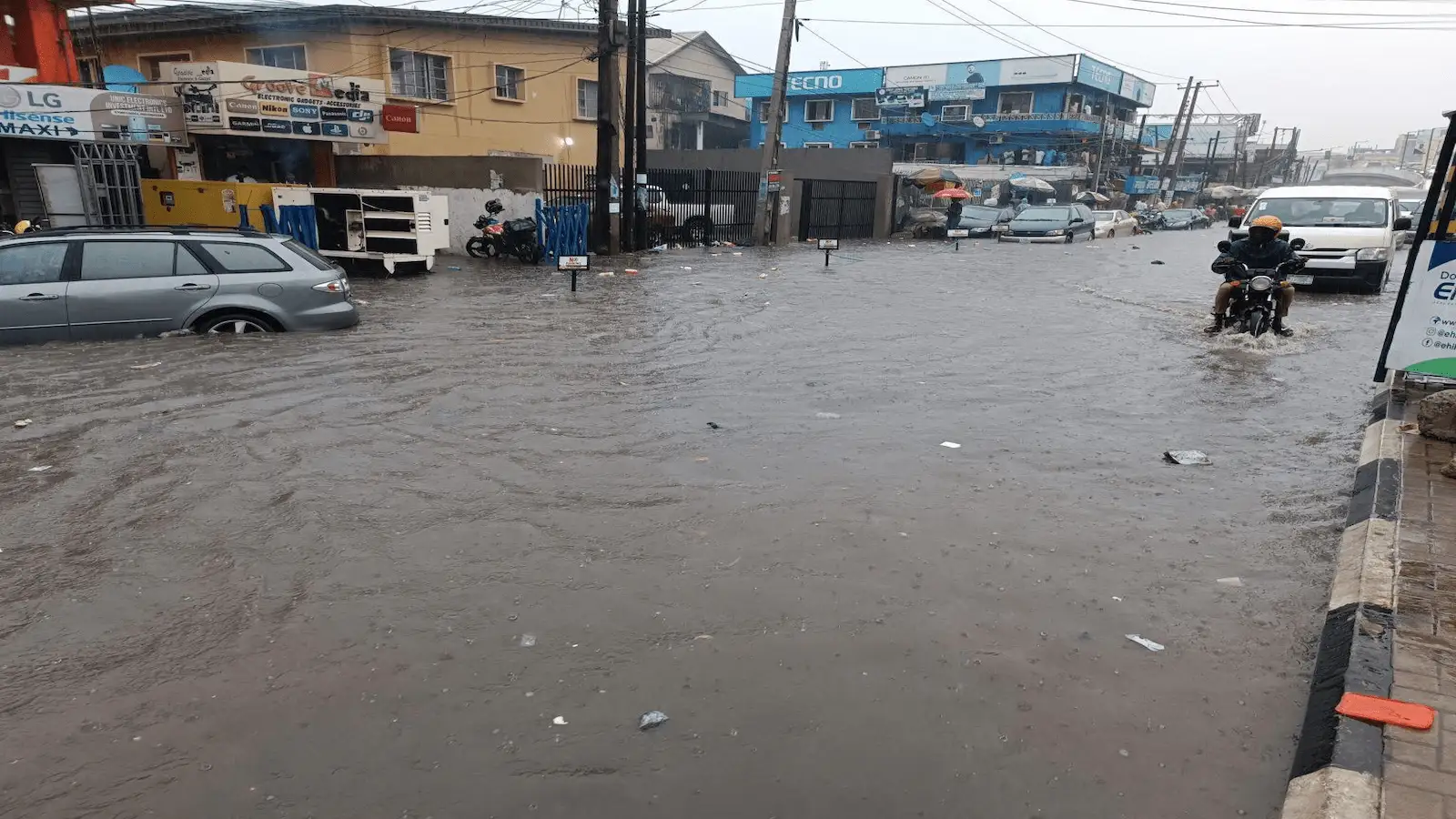
On Monday, June 29, the skies over Lagos darkened with unusual intensity. Within hours, relentless rain began pounding rooftops, roads and neighbourhoods. By dawn on Tuesday, June 30, what had started as a heavy downpour had evolved into one of the most disruptive flooding episodes of the 2026 rainy season. Major highways became rivers, residential estates turned into temporary lakes, vehicles were abandoned in floodwaters, businesses shut their doors, commuters spent hours stranded, and thousands of residents struggled simply to move from one part of Nigeria’s commercial capital to another.
For countless traders, artisans and small business owners, the floodwaters did more than soak goods—they washed away days, weeks and, in some cases, months of investment. Shops were inundated, warehouses suffered water damage, offices suspended operations, schools closed, and commercial activities slowed dramatically across several parts of the state. The economic heartbeat of Lagos, a city responsible for a significant share of Nigeria’s GDP, was forced to beat at a much slower pace.
A City Brought to Its Knees
The two-day rainfall exposed once again the vulnerability of Africa’s largest city to flash flooding. Roads in several communities became impassable as drainage channels overflowed. Public transportation was severely disrupted, motorists abandoned flooded vehicles, while businesses lost valuable operating hours.
Related Post




Although the full economic cost is still being assessed, the losses are expected to run into several billions of naira when destroyed merchandise, damaged vehicles, lost productivity, delayed logistics, repairs to infrastructure and interrupted commercial activities are taken into account. Small and medium-sized enterprises (SMEs), which form the backbone of Lagos’ economy, were among the hardest hit.
The Nigerian Meteorological Agency (NiMet) had warned of sustained rainfall and a heightened risk of flash floods across Lagos and other coastal states, but the sheer volume of rainfall still overwhelmed many drainage systems.
Why Lagos Floods So Easily
Flooding in Lagos is not caused by rainfall alone. It is the result of a complex combination of natural and human factors.
1. Low-Lying Coastal Geography
Lagos is naturally vulnerable because much of the city lies only a few metres above sea level. Surrounded by the Atlantic Ocean, lagoons and an intricate network of creeks, heavy rainfall has limited pathways for rapid drainage. During periods of intense rainfall, runoff accumulates quickly, particularly in densely developed districts.
2. Climate Change
Climate scientists have consistently warned that climate change is increasing the frequency and intensity of extreme rainfall events. Warmer oceans generate greater atmospheric moisture, resulting in heavier downpours over shorter periods. Coastal cities such as Lagos are increasingly experiencing these weather extremes.
3. Rapid Urbanisation
Lagos continues to grow at an extraordinary pace. Large expanses of natural wetlands that once absorbed excess rainwater have been replaced with roads, housing estates, shopping complexes and concrete surfaces. These impermeable surfaces prevent rainwater from soaking into the ground, increasing surface runoff.
The Human Contribution to the Disaster
While nature played its part, human behaviour continues to worsen flooding in Lagos.
One of the biggest contributors is the indiscriminate dumping of refuse into drainage channels, canals and waterways. Plastic bottles, nylon bags, food waste, discarded furniture, construction debris and other solid waste frequently clog drainage systems, preventing water from flowing freely.
Illegal construction on drainage setbacks and wetlands further narrows natural water channels. In many areas, buildings have been erected directly on floodplains, obstructing the movement of stormwater.
Poor enforcement of environmental regulations, inadequate maintenance of drainage infrastructure and the conversion of wetlands into residential developments have also compounded the problem.
Lagos State officials have repeatedly identified blocked drains, illegal structures and indiscriminate waste disposal as major factors behind recurring floods.
Why Flash Floods Are So Difficult to Control
Unlike river flooding, flash floods develop rapidly, often within minutes or hours after exceptionally heavy rainfall.
Several factors make them difficult to contain:
- Extremely intense rainfall over a short duration.
- Limited drainage capacity in heavily built-up areas.
- High population density that slows emergency response.
- Continuous urban expansion reducing natural flood absorption.
- Rising sea levels that hinder the discharge of stormwater into the Atlantic.
Once drainage channels exceed capacity, water spreads rapidly across roads, homes and commercial districts.
What More Should Government Do?
The Lagos State Government has invested in drainage expansion, desilting operations and public environmental campaigns. However, the scale of the challenge demands more comprehensive and long-term interventions.
Priority measures should include:
- Massive expansion and modernization of the state’s stormwater drainage network.
- Routine year-round desilting rather than seasonal emergency clearing.
- Deployment of smart flood-monitoring sensors and real-time early warning systems.
- Strict enforcement against illegal structures blocking drainage channels.
- Restoration and protection of wetlands as natural flood buffers.
- Construction of underground stormwater retention reservoirs in flood-prone districts.
- Expansion of permeable pavements, green spaces and urban parks to improve water absorption.
- Stronger waste management systems with tougher penalties for indiscriminate dumping.
- Improved coordination among environmental, emergency management and urban planning agencies.
- Financial support and emergency relief for affected small businesses and vulnerable households.
Public education must also become continuous rather than seasonal. Environmental responsibility should be integrated into school curricula and community programmes to encourage residents to keep drains free of refuse.
Lessons from Russia
Russia offers useful examples of large-scale flood management, particularly in flood-prone cities.
Perhaps the best-known example is the Saint Petersburg Flood Protection Barrier, a massive system of dams, floodgates and protective embankments stretching across the Gulf of Finland. During severe storm surges, the floodgates are closed to prevent rising sea levels from inundating the city, protecting millions of residents and billions of dollars in infrastructure.
Russian authorities also employ:
- sophisticated meteorological forecasting;
- automated flood monitoring;
- extensive river dredging;
- engineered flood retention basins;
- reinforced embankments;
- strict zoning regulations restricting development in high-risk floodplains.
These measures have significantly reduced flood risks in several regions despite harsh climatic conditions. While Lagos faces different geographical realities, similar investments in engineering, technology, environmental enforcement and long-term urban planning could substantially reduce future flooding.
A Shared Responsibility
Government alone cannot solve Lagos’ flooding crisis.
Residents must abandon the culture of dumping refuse into gutters and canals. Property developers must respect approved drainage setbacks and environmental regulations. Businesses should invest in flood preparedness, while community associations should actively participate in maintaining neighbourhood drainage systems.
Flood resilience is built through collective responsibility.
Looking Ahead
The June 29–30 rainfall serves as another stark reminder that Lagos can no longer treat flooding as a seasonal inconvenience. It has become an economic, environmental and public safety emergency.
As climate change intensifies and urban expansion continues, similar events may become more frequent unless decisive action is taken.
Every blocked drainage channel today becomes tomorrow’s flooded street.
Every wetland reclaimed without proper planning increases tomorrow’s disaster risk.
Every bag of refuse dumped into a canal may contribute to another family losing its livelihood.
Lagos has the expertise, financial capacity and institutional framework to become one of Africa’s leading flood-resilient cities. Achieving that goal will require stronger political will, sustained investment in modern infrastructure, strict environmental enforcement and, above all, a renewed commitment by every resident to protect the city they call home.
References
- Nigerian Meteorological Agency (NiMet), Weather Outlook and Flash Flood Advisory, June 30, 2026.
- Vanguard Newspaper, Floods Displace Lagos Residents, Shut Businesses, Disrupt Traffic, June 30, 2026.
- TheCable, Floods as a Test of State Capacity in Nigeria, June 30, 2026.
- Lagos State Government, Annual Flood Preparedness Advisory.
- Background information on Lagos’ geography and climate.