

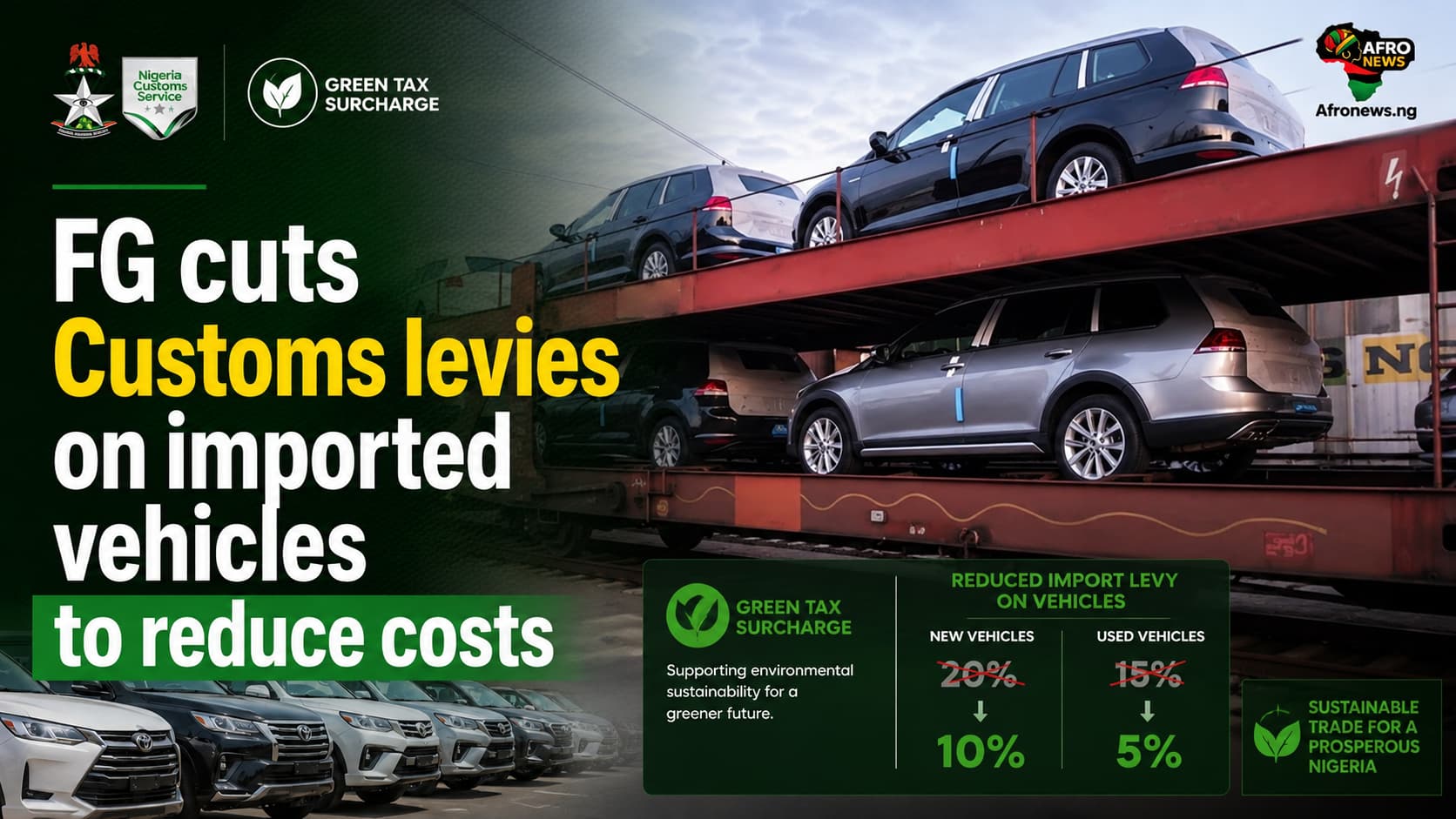
The Federal Government has introduced a new tariff regime that significantly reduces Customs levies on imported vehicles, a move aimed at lowering the cost of vehicle importation and making cars more affordable for Nigerians.
The new policy, which took effect on July 1, 2026, forms part of the Federal Government’s 2026 fiscal policy measures and a broader review of Nigeria’s import tariff and Customs system to boost trade and economic activities.
Under the revised tariff structure, the import levy on new vehicles has been reduced from 20 per cent to 10 per cent, representing a 50 per cent cut. For used vehicles, the levy has been slashed from 15 per cent to 5 per cent, a reduction of about 67 per cent.
The announcement was made by the Nigeria Customs Service (NCS) in a statement published on its official website.
According to the Service, the new tariff takes effect alongside the introduction of a Green Tax Surcharge, which is designed to promote environmental sustainability while easing the financial burden on vehicle importers.
The Customs Service stated:
“Beginning July 1, 2026, the Nigeria Customs Service will implement the Green Tax Surcharge as part of the 2026 Fiscal Policy Measures to support environmental sustainability, while reducing the import levy on new vehicles from 20% to 10% and that of used vehicles from 15% to 5% to ease the cost of vehicle importation.”
Benefits of the new policy
The reduction in import levies is expected to:
- Lower the cost of importing new and used vehicles.
- Make cars more affordable for businesses and individual buyers.
- Reduce the financial burden on vehicle dealers and importers.
- Boost activities at Nigerian ports and encourage legitimate imports.
- Improve access to vehicles for transportation and commercial purposes.
Possible downsides
Despite the expected benefits, the policy could also present some challenges:
- Reduced import levies may lead to lower government revenue from Customs collections.
- Increased importation of used vehicles could slow the growth of Nigeria’s local automobile manufacturing industry.
- More imported vehicles could worsen traffic congestion and put additional pressure on road infrastructure.
- Unless properly managed, the increase in vehicle imports may offset some of the environmental benefits the new Green Tax Surcharge seeks to achieve.
Industry stakeholders will be watching closely to see whether the reduction in import levies translates into lower vehicle prices for consumers in the coming months.