

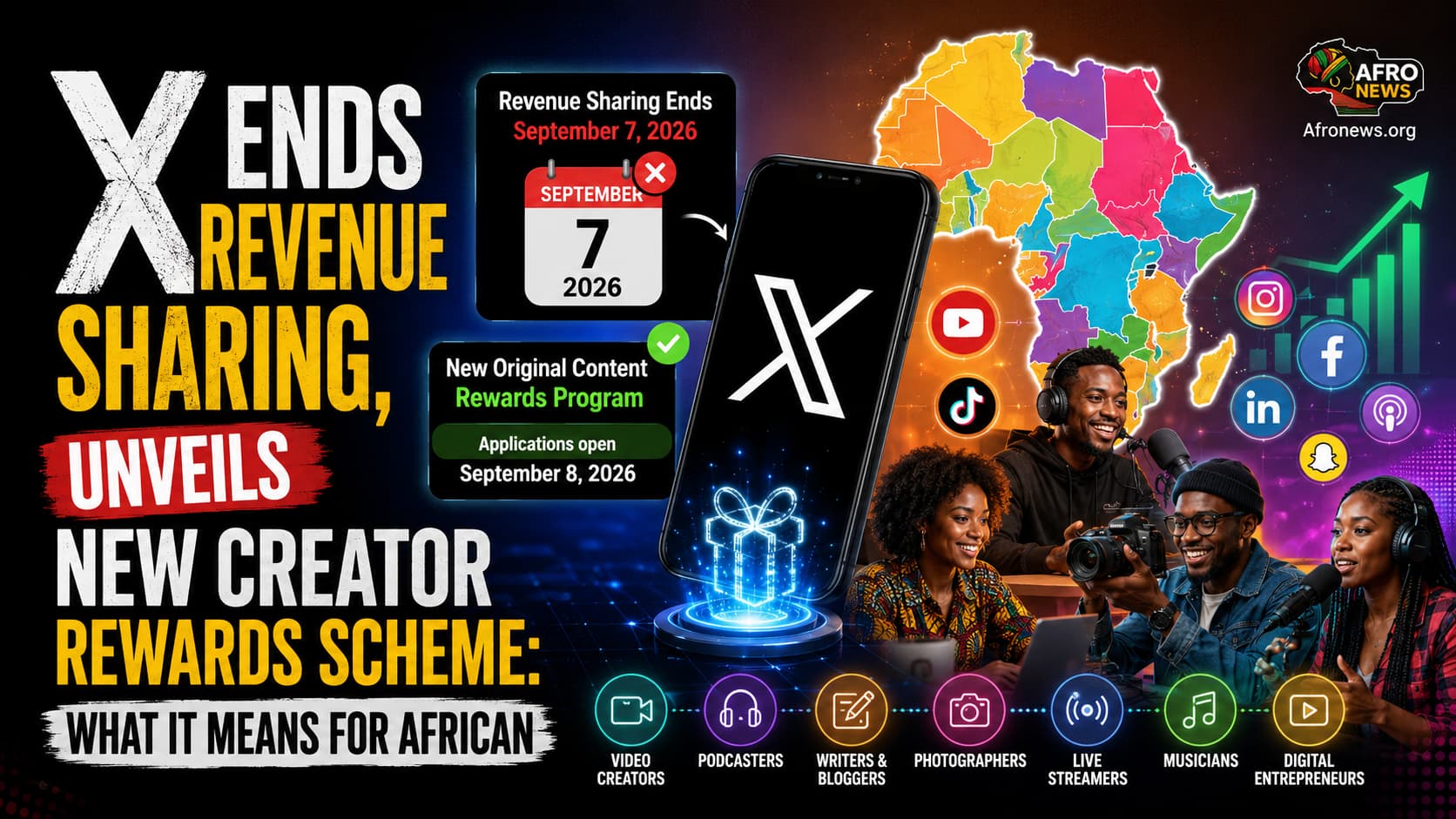
X is scrapping its revenue-sharing programme and replacing it with a new reward system designed to put greater emphasis on original content, potentially reshaping how thousands of African creators earn money on the platform.
The social media platform, formerly known as Twitter, says its existing Revenue Sharing Programme will end on September 7, 2026, as it transitions to the new Original Content Rewards Program.
Under the new system, X says creators will be rewarded for producing original material and making meaningful contributions to conversations on the platform.


The company announced the change through the X Creators Team, describing the new programme as a fresh approach to rewarding the people whose content drives activity and engagement on X.
“Today, we’re introducing the Original Content Rewards Program, a new way for creators to earn on X by sharing original content and contributing meaningfully to the conversation,” the company said.
Creators currently participating in the Revenue Sharing Programme will continue earning through September 7, with their final revenue-sharing payout scheduled for September 11, 2026.
Applications for the new programme are expected to open on September 8, subject to creators meeting X’s eligibility requirements.
Creators will be able to check their eligibility through Creator Studio, under the Original Content Rewards section.
X also said creators who have already completed identity verification and connected a valid payout method will not need to repeat the process.
“Once approved, you’ll continue earning under the Original Content Rewards Program and its Terms and Conditions,” X said.
Why the Change Matters
The move represents more than a change in payment structure. It could alter the type of content African creators produce, particularly as creators increasingly rely on platforms such as X for audience growth, influence and income.
For creators in Nigeria and other African markets, where digital content creation has become an important part of the informal and emerging creative economy, the key question is simple:
Will X reward originality or will creators simply find new ways to chase engagement?
The answer will depend heavily on how X defines and measures “original content” and “meaningful” contribution.
Five Ways the New Programme Could Affect African Content Creators
1. Original reporting could become more valuable
African journalists, commentators, analysts, photographers, videographers and independent publishers could benefit if X gives greater weight to content that creators produce themselves.
Instead of simply reposting viral stories, creators may have greater incentives to develop exclusive reports, eyewitness accounts, analysis, interviews, investigations and original commentary.
This could be particularly significant in Nigeria, where social media has become an important source of breaking news.
2. Content aggregation could become less attractive
Many creators build audiences by reposting trending stories, screenshots and videos originally produced by other people.
If the new reward system strongly favours original material, that strategy could become less financially attractive.
Creators may therefore have to move from simply sharing what is trending to creating what becomes trending.
3. African creators may invest more in quality
The programme could encourage creators to take content production more seriously.
For some, that could mean investing in better cameras, microphones, editing software, research, graphics and production teams.
This could create opportunities across the wider digital economy, including for video editors, graphic designers, writers, researchers, social media managers, photographers and producers.
4. Smaller creators could face a new challenge
While rewarding original content sounds positive, the real impact will depend on how accessible the programme is to smaller creators.
Creators outside Africa’s biggest digital markets may struggle if monetisation depends heavily on large audiences, engagement levels or other requirements that favour established accounts.
X will therefore need transparent eligibility and payment criteria if the programme is to benefit creators across emerging markets rather than concentrating rewards among the biggest accounts.
5. Creators may diversify their income
The change is also a reminder that creators should not depend entirely on one platform.
African creators can use X to build audiences while developing additional revenue streams through brand partnerships, YouTube, newsletters, podcasts, websites, subscriptions, events, consulting and direct business opportunities.
Could It Help Reduce Fake News and Misinformation?
Potentially but not automatically.
One possible benefit of an originality-focused reward system is that it could make low-effort reposting and recycled material less financially attractive.
If X’s programme rewards genuine reporting, expert analysis and original commentary while limiting rewards for copied or misleading material, it could create a stronger economic incentive for responsible content production.
However, originality does not necessarily mean accuracy.
A creator can produce completely original content and still spread false information.
That means X would need to combine the new rewards system with effective measures against misinformation, manipulated content, impersonation and deliberate deception.
For Africa, this is particularly important because misinformation can spread rapidly during elections, public-health emergencies, conflicts and major political or economic events.
The biggest potential benefit would therefore come from rewarding original AND credible content, rather than originality alone.
Could It Reduce Unemployment in Nigeria and Africa?
The programme could contribute to employment but it should not be presented as a solution to Africa’s unemployment crisis.
Nigeria has a rapidly expanding digital and creative economy, and opportunities for content creators can generate work for people beyond the person appearing on camera.
A successful creator can create demand for:
- Video editors
- Camera operators
- Graphic designers
- Scriptwriters
- Researchers
- Producers
- Social media managers
- Voice-over artists
- Photographers
- Digital marketers
- Animators
- Podcast producers
If X’s new programme generates meaningful and sustainable income, it could therefore contribute to the growth of Africa’s creator economy and digital jobs market.
But the scale will depend on how much X pays, how many African creators qualify, payment accessibility, local purchasing power and whether creators can build sustainable businesses around their audiences.
The programme could create opportunities; it cannot replace broader job creation, investment, skills development and economic reforms needed to tackle unemployment.
The Bigger Picture for Africa
X’s decision could mark a shift in the platform economy from engagement-driven monetisation toward creator-driven value.
For African creators, that could be both an opportunity and a warning.
Creators who rely heavily on reposts, viral clips and recycled content may need to rethink their strategies.
Those who can consistently produce original journalism, distinctive commentary, cultural content, expert analysis, entertainment and storytelling could be better positioned to benefit.
Ultimately, the success of the programme will depend on execution.
If X genuinely rewards original, credible and valuable content, the change could strengthen Africa’s growing creator economy.
If it merely changes the payment formula without improving transparency or tackling misinformation, creators may simply adapt their strategies to chase another set of platform metrics.
For African creators, the message is clear: originality is becoming an increasingly valuable currency—but credibility will determine whether that currency is worth anything.
X: Original Content Rewards Program
The Verge: X replaces its revenue-sharing program with Original Content Rewards
TechCrunch: X replaces ‘misaligned’ revenue sharing program with Original Content Rewards