

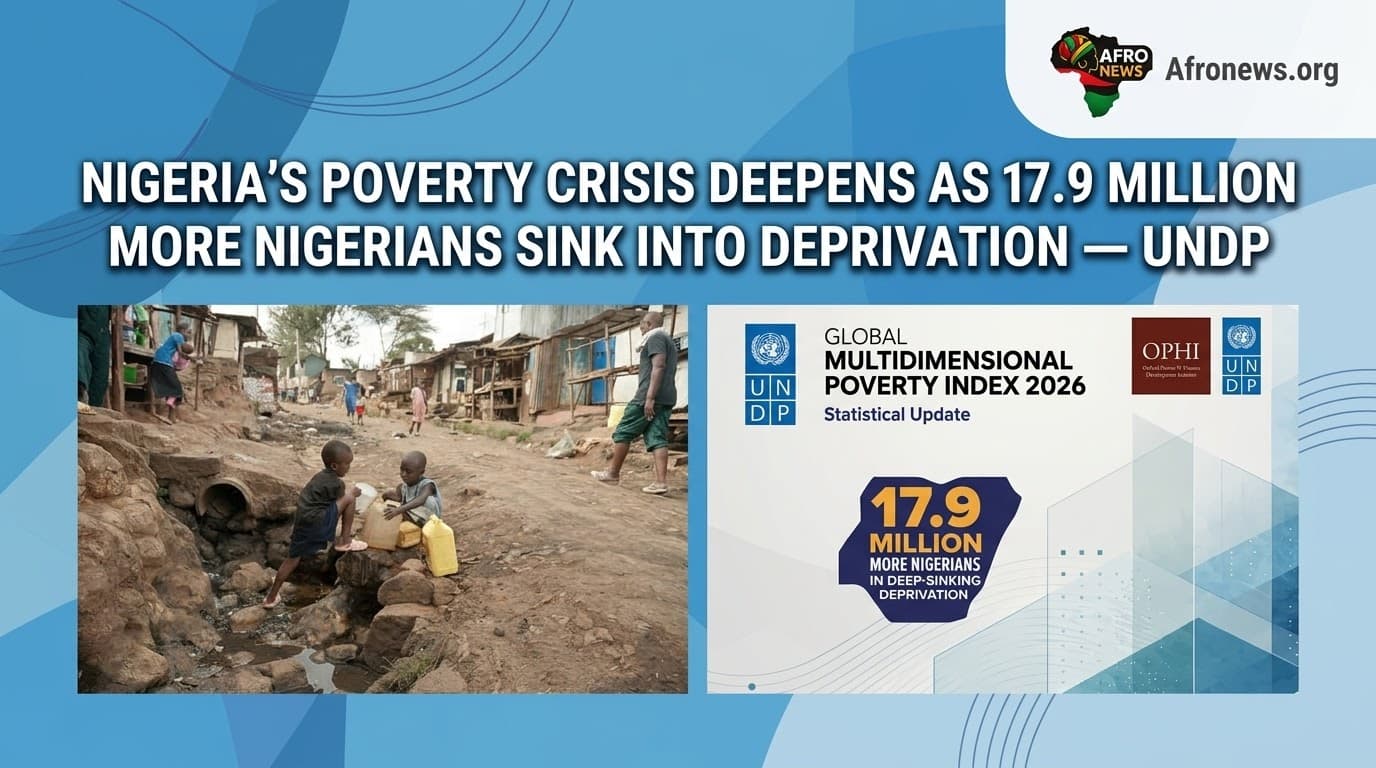
Nigeria’s poverty crisis is worsening, with 17.9 million more Nigerians falling into multidimensional poverty between 2021 and 2024, according to a new United Nations Development Programme (UNDP) report.
The 2026 Global Multidimensional Poverty Index (MPI), produced by the UNDP and the Oxford Poverty and Human Development Initiative (OPHI), puts Nigeria’s poverty rate at 38.7 per cent in 2024, up from 33 per cent in 2021.
The number of Nigerians affected rose from 72.2 million to 90.1 million, marking the largest increase in multidimensional poverty among the five countries that recorded a rise during their latest measurement periods.
The findings raise fresh concerns about the country’s fight against poverty, particularly as the latest figures reverse gains recorded between 2018 and 2021.
Related Post




The number of Nigerians affected rose from 72.2 million to 90.1 million, marking the largest increase in multidimensional poverty among the five countries that recorded a rise during their latest measurement periods.
The findings raise fresh concerns about the country’s fight against poverty, particularly as the latest figures reverse gains recorded between 2018 and 2021.
Poverty Progress in Reverse
Nigeria’s multidimensional poverty rate fell from 42.3 per cent in 2013 to 37.2 per cent in 2018, before dropping further to 33 per cent in 2021.
That progress has since been eroded.
The country’s MPI value, which measures both the incidence and intensity of deprivation, climbed from 0.175 in 2021 to 0.208 in 2024. The intensity of deprivation among poor Nigerians also increased from 52.9 to 53.6 per cent.
Unlike income-based poverty measurements alone, multidimensional poverty captures overlapping disadvantages in areas such as education, health and living standards.
Millions Left Behind
The report highlights stark regional inequalities, with multidimensional poverty incidence ranging from 3.7 per cent to 88.3 per cent across the subnational regions covered.
It also notes that communities with similar overall poverty levels can experience different forms of deprivation, underscoring the need for targeted interventions rather than a one-size-fits-all approach.
Nigeria’s Crisis Reflects a Wider African Challenge
Globally, about 1.2 billion people across 108 countries live in acute multidimensional poverty, representing 18.9 per cent of the population covered by the index.
Sub-Saharan Africa accounts for the largest share, with 616 million people — 51.4 per cent of the region’s population — living in multidimensional poverty.
Children are among the hardest hit. Worldwide, 617 million children under 18 account for 51.5 per cent of people living in multidimensional poverty.
In sub-Saharan Africa alone, 355 million children are affected.
For Nigeria, the numbers deliver a troubling verdict: millions more people are struggling to meet basic needs, and the gains once recorded in the fight against poverty are slipping away. The figures put renewed pressure on policymakers to demonstrate that economic reforms can translate into better living conditions for ordinary Nigerians.
Reference
Official UNDP 2026 Global Multidimensional Poverty Index Report
TheCable — Nigeria’s Multidimensional Poverty Rate Rises to 38.7% as 17.9 Million Citizens Battle Deprivation: