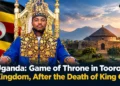

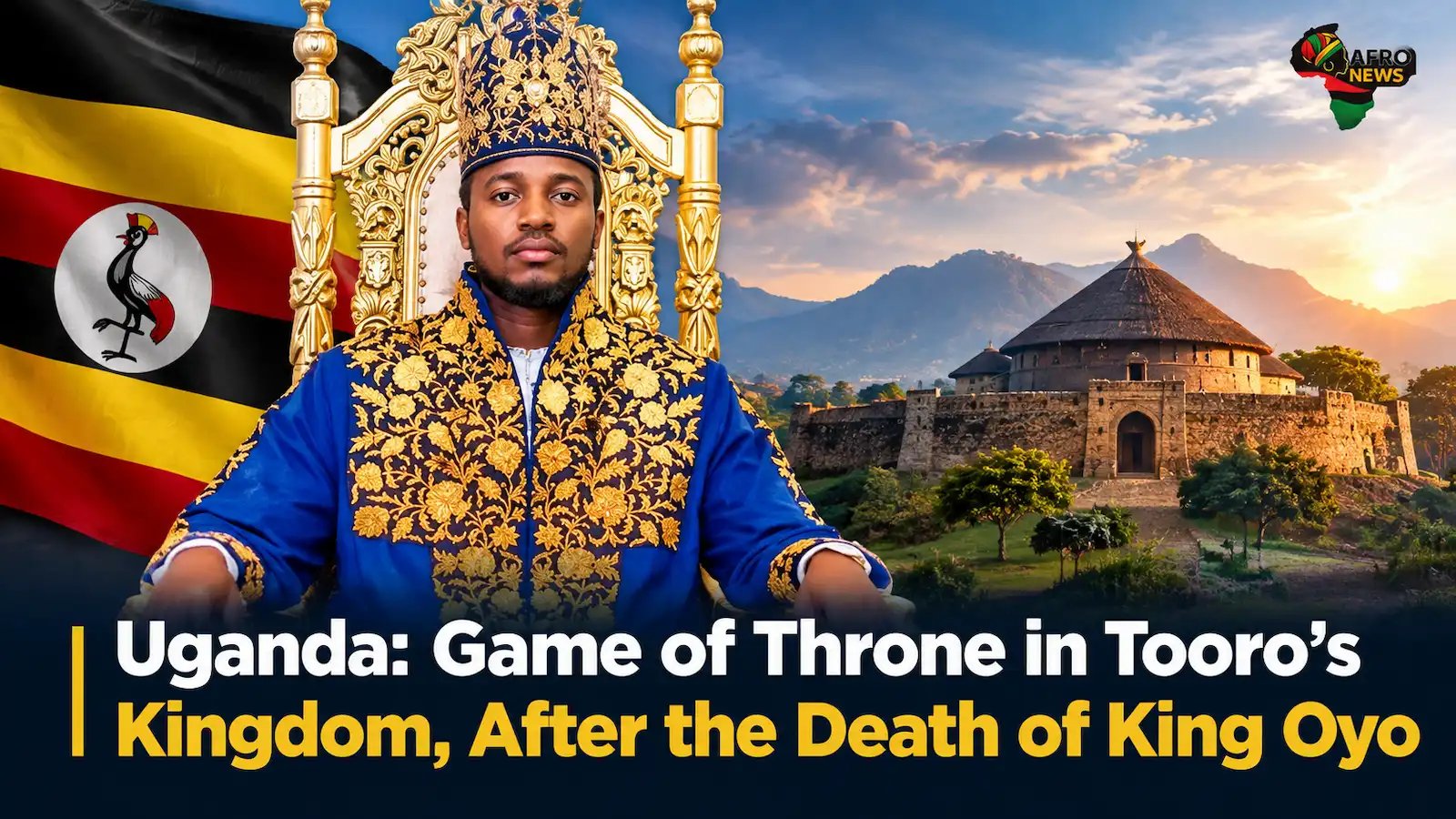
The death of King Oyo has left Tooro with a new king, a royal dispute and questions over an heir whose existence was unknown to the public.
For most Ugandans, King Oyo Nyimba Kabamba Iguru Rukidi IV was the only Tooro king they had ever known.
He was three years old when he inherited the throne in 1995. For the next three decades, his face became closely associated with the kingdom, first as the child king who drew international attention and later as a young monarch who grew into his role.

Now he is gone.
Oyo died on August 27, aged 34, after receiving cancer treatment in the United States. He was buried at the Karambi Royal Tombs in Fort Portal on September 12.
But even as Tooro mourned its king, a difficult question was already taking shape: who comes next?
The answer has turned into a dispute involving the royal family, traditional leaders and an alleged son of the late king whose existence had never been publicly known.
A New King, But No Simple Succession
The Tooro royal clan has selected Prince Edward Rukidi Kijanangoma, a cousin of Oyo, as the next king. Kijanangoma is a journalist and news anchor with Uganda Broadcasting Corporation. His selection followed the traditional process through which the royal clan chooses a new Omukama, the title given to Tooro’s king.
But Oyo’s family has challenged the decision. His mother, Queen Mother Best Kemigisa, and his sister, Princess Ruth Komuntale, say Oyo left behind a 2022 will naming his biological son as his successor.
That claim has introduced an unexpected figure into the centre of the dispute.
The boy was not publicly known during Oyo’s lifetime. The late king was unmarried and had not publicly presented himself as a father. For a kingdom preparing for the funeral of its monarch, the revelation could hardly have come at a more sensitive moment.
At the heart of the disagreement is the role of the royal clan. Its succession committee has recognised Kijanangoma, while Oyo’s family says the late king’s wishes should also carry weight.
They point to the alleged 2022 will and the existence of his son.
Who Has the Final Say?
This is where the story becomes complicated.
The disagreement is not simply about one child or one royal family. It is about two different ideas of legitimacy. One rests on customary authority and the decision of the royal clan.
The other rests on the late king’s alleged wishes and the principle of hereditary succession through his biological child. For now, the two positions remain difficult to reconcile.
Tooro is not a sovereign kingdom in the political sense.
Uganda is a republic, and the country’s traditional kings do not govern in the way monarchs once did. The kingdoms were restored in 1993 primarily as cultural institutions after having been abolished under the previous political order.
Yet that does not make the monarchy irrelevant.
For many people in Tooro, the king remains a powerful symbol of history, identity and community. The institution connects the present kingdom with generations of Babiito rulers who came before.
That helps explain why the current dispute can attract such attention even though the king has no constitutional power to run the Ugandan government.
The crown may be ceremonial, but it still means something.
A Kingdom Trying to Avoid Division
Oyo’s own story made him particularly difficult to replace.
He became king as a toddler, at a time when much of the world knew him simply as the “boy king” of Uganda. As he grew older, however, that image changed.
He took on public responsibilities and became involved in causes including youth empowerment, health and environmental conservation. He also became a familiar figure at national and international events. His reign lasted more than 30 years.
For an entire generation in Tooro, there was never another king. His death therefore represents a significant change even before the current disagreement is resolved.
The royal family and traditional leaders have since faced calls for calm.
Tooro’s prime minister, Calvin Armstrong Rwomiire Akiiki, has urged the different sides to follow the appropriate traditional and legal processes. Religious leaders have also appealed for unity.
Those appeals matter because the question is no longer confined to the royal household. The longer the disagreement continues, the greater the risk that a family and traditional leadership dispute becomes a wider division within the kingdom.
Kijanangoma has already been presented as the new king. Yet questions surrounding Oyo’s alleged son remain. That leaves Tooro in an unusual position: it has a new monarch, but the circumstances surrounding his arrival on the throne remain contested.
What happens when longstanding traditions come up against modern legal processes, written wills or competing claims of inheritance?
Tooro is now confronting that question in real time.
For now, the crown belongs to Edward Rukidi Kijanangoma.
But the story of King Oyo’s successor is clearly not finished.
And somewhere at the centre of it is a child whose identity could shape the future of one of Uganda’s most important traditional kingdoms.
People also read: Isese Day: When Yoruba Tradition Comes Alive: Culture, Spirituality and a Tourism Goldmine