

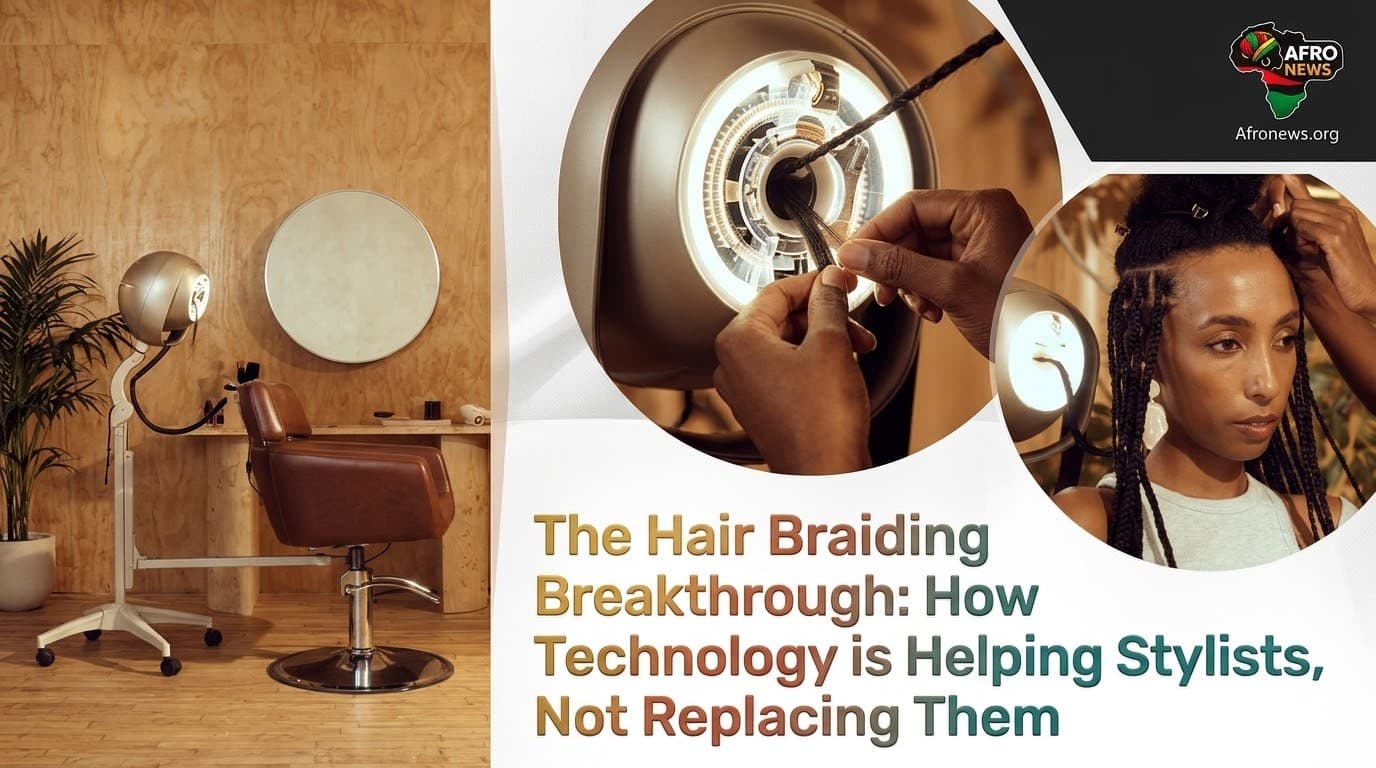
When we think of new technology, we usually picture sterile laboratories or corporate offices. But some of the best inventions are born in everyday places—like sitting in a salon chair.
This is exactly how Yinka Ogunbiyi, a Harvard-trained engineer, came up with HaloBraid. During the pandemic lockdown, she tried to braid her own hair. It took her an exhausting four days. Instead of accepting this long process as normal, she decided to use technology to fix it.
People often worry that robots and automation will take away human jobs. However, this technology is designed to help humans, not replace them. HaloBraid acts like an extra set of hands that does the fast, repetitive weaving. This leaves the human stylist free to focus on the artistic parts of the job, like sectioning the hair, designing the look, and finishing the ends.




This new tool creates a better experience for everyone in the salon. It saves customers massive amounts of time, turning appointments that used to take all day into a fraction of the time. At the same time, it protects the physical health of stylists by eliminating the painful hand, wrist, and back strain caused by hours of repetitive weaving. Because appointments are so much faster, salon owners can also serve more clients each day without adding stress to their staff.
This is a great example of how technology should be used. It shouldn’t be about replacing people or taking away their livelihoods to save money. It should be about making a grueling task faster, easier, and less painful for everyone involved.
The best technology does not try to replace the human touch. It simply gives us our time back and makes our lives better.