
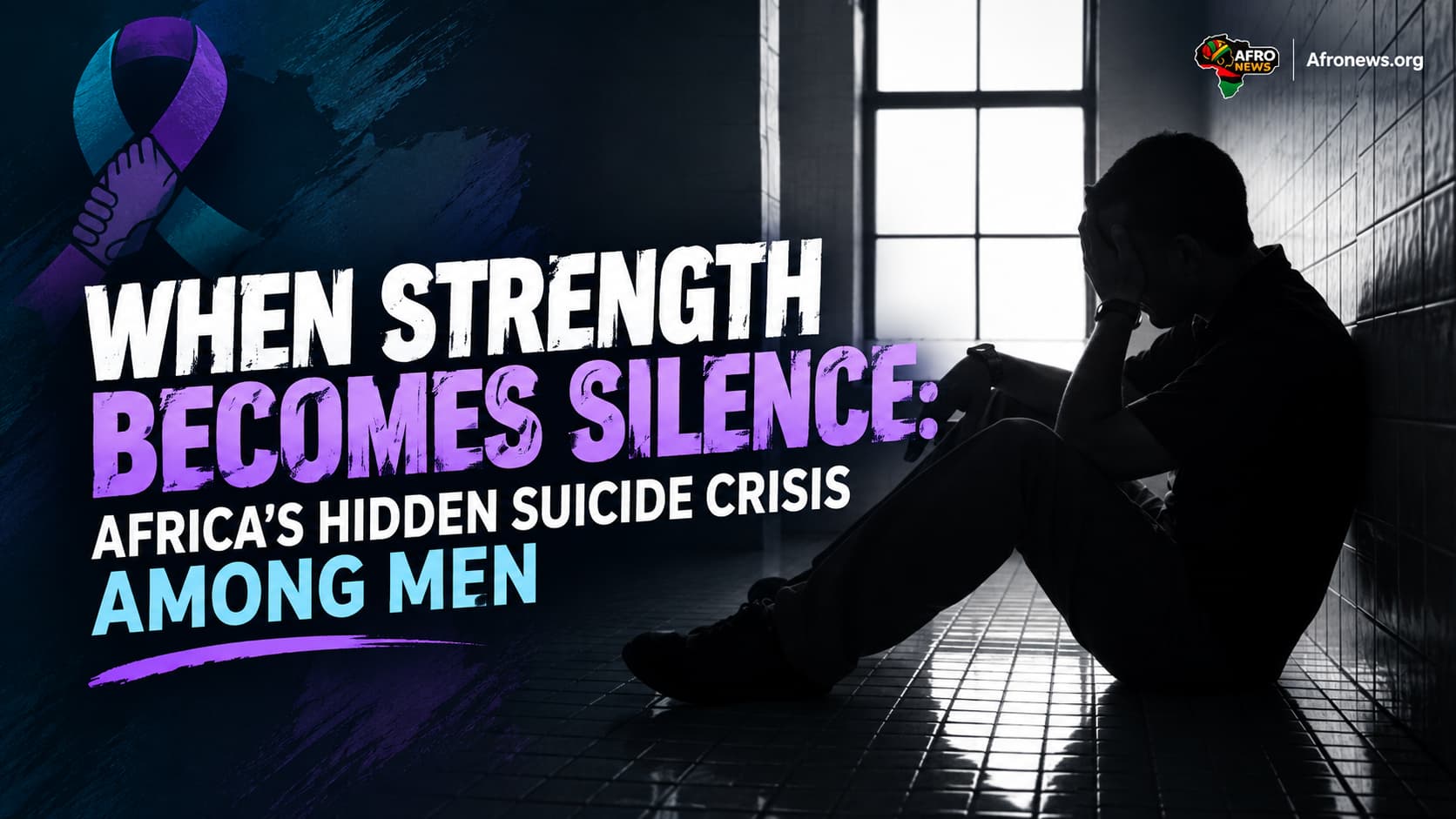
Suicide remains a leading cause of death among young adults worldwide, and Africa is no exception.
The burden is particularly heavy among men, who die by suicide at nearly twice the rate of women.
In Sub-Saharan Africa, the statistics are stark: Lesotho records over 30 deaths per 100,000 people, Eswatini nearly 28, and South Africa more than 22.
Even in countries with lower rates, such as Nigeria at 4.9 and Kenya at 4.6, underreporting and stigma mean the true figures may be higher.
These numbers reveal a silent epidemic one that demands urgent attention.
The roots of this crisis lie in the intersection of cultural expectations and mental health.
The recent study on Northern Sotho men published in BMC Psychology shows how rigid masculine norms like toughness, stoicism, and self-reliance can worsen mental health outcomes.
Men often avoid expressing vulnerability or seeking professional help, fearing it will be seen as weakness.
This silence breeds isolation, depression, and hopelessness — all of which are risk factors for suicide.
For African men, the pressure to be providers and protectors compounds the problem.
When the pressures of unemployment, looming poverty, or family stress undermine these roles, men may feel they have failed in their identity, with no other way to present themselves.
Another study comes from the World Health Organization’s regional analysis of suicide in Africa, which emphasizes that men are consistently more vulnerable due to cultural expectations and limited access to mental health services.
The report unfortunately highlights that in many of our countries, suicide rates among men are two to four times higher than those of women, with Southern Africa showing some of the highest figures globally.
Suicide Awareness Month offers an opportunity to break the silence.
Campaigns across Africa continue the uphill struggle of challenging harmful masculine norms and promoting healthier models of manhood.
Sharing stories of men who sought help and found healing helps in reframing vulnerability as courage.
Universities, workplaces, and community organizations can create safe spaces where men can talk openly about mental health without fear of stigma.
Other effective coping strategies include social connectedness, positive reframing, and professional support.
Yet these strategies are often too westernised, requiring cultural adaptation: interventions must integrate traditional practices, spirituality, and community dialogue to resonate with African men.
Ultimately, suicide among African men is not just an individual tragedy but a reflection of broader cultural and psychological dynamics.
Masculine expectations of toughness and silence often prevent men from accessing support, leaving them at risk.
Addressing this means investing in research and awareness campaigns that highlight the lived realities of African youth, ensuring that no one feels alone in their struggle.
Suicide Awareness Month should not only commemorate lives lost but also ignite a collective commitment to resilience, compassion, and change.
Supporting men to speak, seek help, and reframe their struggles is essential for reducing suicide rates and fostering resilience across the continent.
World Health Organization (WHO) — Suicide: Global facts, risk factors, stigma, prevention and current statistics.
WHO: Suicide Fact Sheet
WHO — Suicide Worldwide in 2021: Global Health Estimates: Country-level suicide estimates, including sex-disaggregated data for African countries.




WHO: Suicide Worldwide in 2021
WHO Regional Office for Africa — Suicide Regional Fact Sheet: Data on suicide rates across Africa, including the significant difference between male and female suicide rates.
WHO Africa: Suicide Regional Fact Sheet
WHO African Region — Mental Health: Information on suicide, stigma, mental-health access and prevention challenges in Africa.
WHO Africa: Mental Health
WHO — Suicide Data: Methodology, data-quality limitations and the problem of under-reporting and misclassification, particularly in low- and middle-income countries.
WHO: Suicide Data