
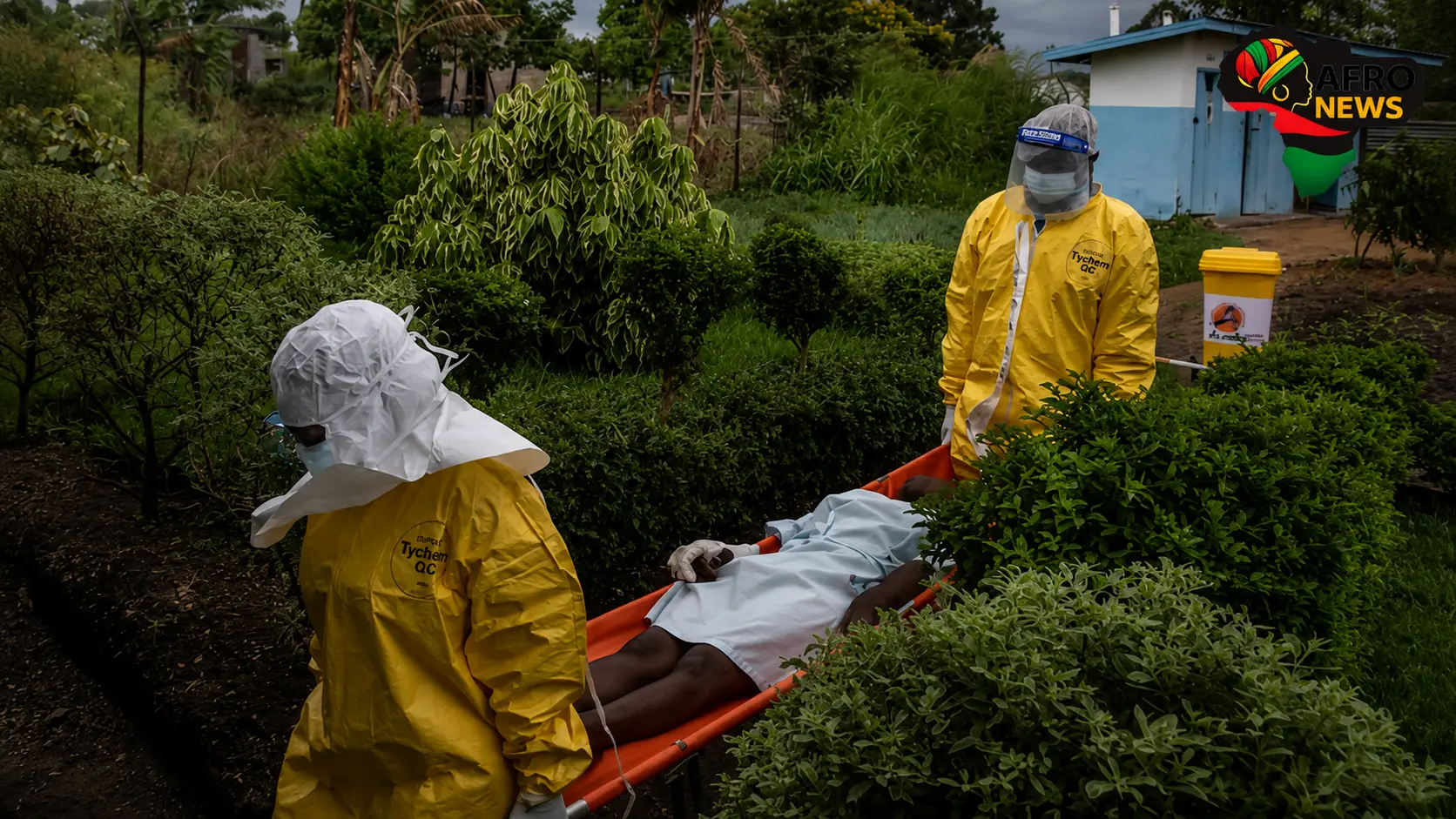
Bunia, DR Congo – As reported by Africanews, Ebola treatment in Congo is seeing a positive shift as more people come forward to receive care for the deadly haemorrhagic virus, with medical staff in Ituri province reporting growing community trust in health services.
In the town of Bunia, the epicentre of the current outbreak, health workers say this change in behaviour is making their job easier and saving lives.
Dr Job Kkabagambe Tibasima, deputy supervisor for the Ministry of Health at the Ebola Treatment Centre at the Evangelical Medical Centre in Bunia, says the relationship between communities and health service providers is improving.
Related Post




“The patient who comes to the centre receives their treatment properly and leaves without incident, and at the end, they even thank the medical team,” he said.
This marks a notable turnaround from earlier in the outbreak, when at least a dozen facilities were attacked by ordinary people. Those attacks were largely driven by fear, misinformation, and deep mistrust of outside authorities, a pattern seen in previous Ebola outbreaks across the region.
The Scale of the Outbreak
Since mid-May, more than 1,000 people have died from Ebola, with most deaths occurring in communities rather than in treatment centres. Over 2,500 cases have been reported so far.
However, with insecurity and active conflict continuing to limit access to affected areas, health officials estimate that the actual number of cases could be more than twice as high.
Challenges Remain
Despite the growing trust, the Ebola outbreak continues to outpace the response on several fronts:
i) Contact tracing now reaches about 80 per cent of identified contacts. This is an improvement, but teams still cannot reach every community.
ii) Diagnosis and response teams cannot be deployed to every affected area due to ongoing violence.
iii) Community engagement, safe burials, and clinical management remain priorities in Ituri province.
At the same time, there is an urgent need to rapidly build response capacity in newly affected provinces before transmission becomes established.
A Call for Peace
The World Health Organization (WHO) says the response faces not only technical challenges but also requires political action.
A ceasefire is urgently needed to improve humanitarian access and allow for the scale-up of operations. The WHO has stressed that the people of DR Congo cannot face this outbreak alone. They need sustained support from the international community—and above all, they need peace.
Anaysis: Ebola Treatment in Congo vs Crisis
The growing trust between communities and health workers in Bunia is a testament to the resilience of Congolese people in the face of repeated health crises. However, this progress is fragile. Without a ceasefire and improved humanitarian access, the outbreak risks spiralling further out of control.
As has been seen with Ebola and other outbreaks across Africa, community engagement is the cornerstone of effective public health response. But community engagement cannot succeed where conflict prevents health workers from reaching those in need. Peace is not just a political ideal, it is a public health necessity.
People Also Read: Africa must never forget the historical cost of slavery, colonialism, and apartheid