

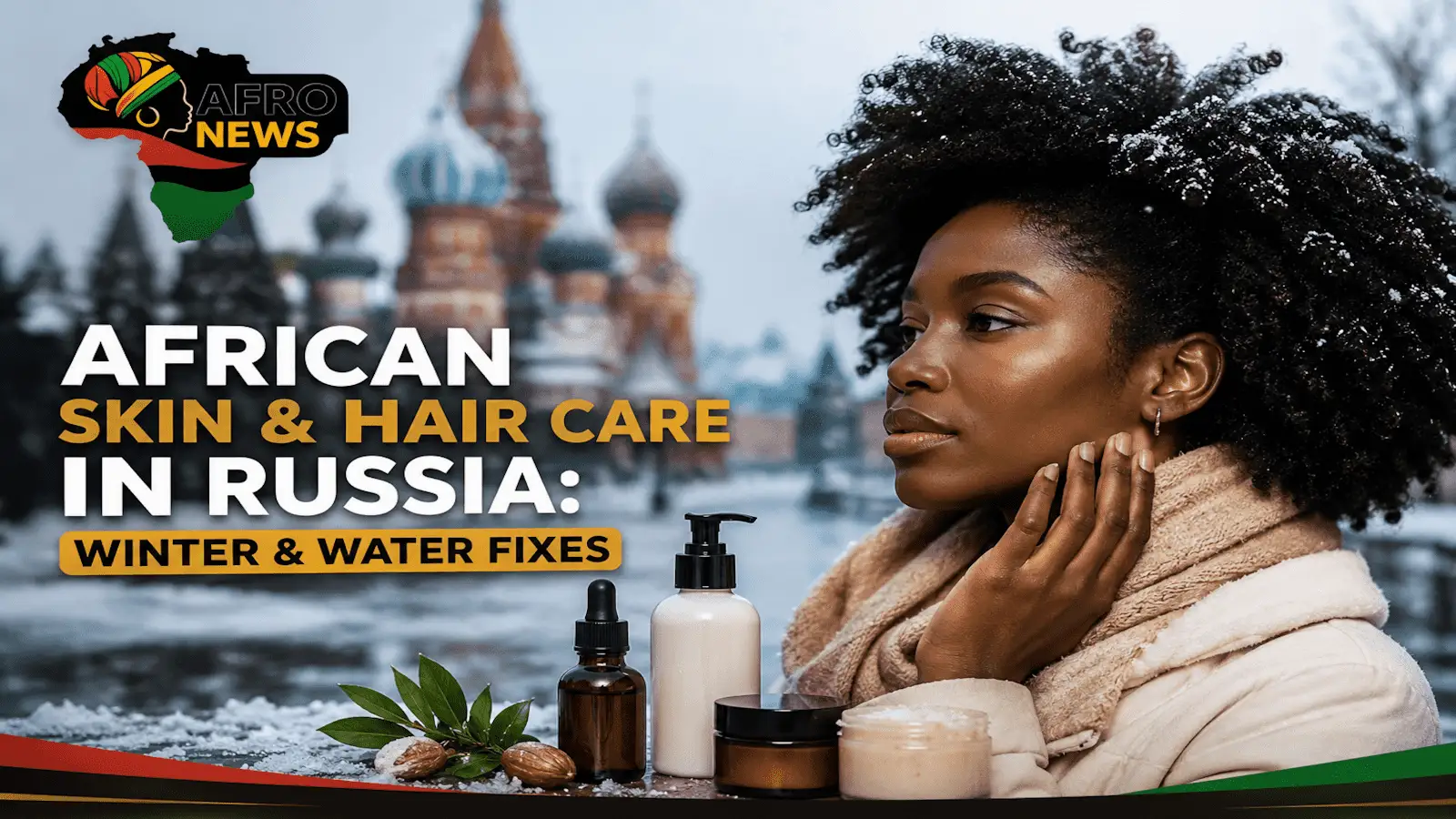
For your African skin and hair. If you don’t bathe with bottled water, then you have probably noticed a difference between using the tap water in Russia as compared to when you were home.
A part of this is due to lack of familiarity and the chemistry of the water. Some people report that their hair is fighting to stay strong while others complain that after stepping out of the shower they look like they have never applied any moisturiser a day in their life. These are common concerns for African in Russia. The struggles vary, but they definitely exist. It’s time to unpack these struggles while finding sustainable solutions so you can feel comfortable in your skin again.
The Russian climate is a true 180-degree turn for most, if not all, Africans who have moved here. Though African countries experience winter and sometimes reach a few degrees below zero, there is nothing that can adequately prepare anyone for the harsh reality of a full Russian winter.

Winters in Russia are extremely cold, seemingly endless, and predominantly without any sun for weeks at a time. No sun means no more free vitamin D synthesis through your skin. This nutrient acts as the secret ingredient that helps to build a resilient skin barrier which locks in moisture, and reflect light beautifully, giving you that vibrant, healthy glow, AKA, that ‘melanin/African glow’.

Long winters mixed with the high levels of chlorine used to treat municipal water is the combo that can make things look or feel off about the change to Russia. Chlorine in the water is what causes that unmistakable post-shower pale, chalky, ashy complexion and tight feeling. So, even though this disinfectant instantly destroys germs to ensure safe drinking standards, it has its cosmetic flaws for those with melanin-rich skin.
Additionally there are some people who experience issues with their hair, including excessive dryness, brittleness, split ends, as well as reduced hair growth. Winter and water differences, however, is not the only thing that causes these dramatic shifts; so is a lack of familiar hair products on local shelves.
Although there is a growing variety of international hair care items in major cities, these products do not always include the specific brands you would use from home made specifically to cater to the unique needs of Afro-textured hair. Visiting a dermatologist and a hair specialist are undoubtedly the best ways of going about managing persistent hair and skin issues after such a drastic environmental move.
It is also critically important you monitor any subtle or sudden changes in your hair density and skin tone whenever trying out new remedies, unfamiliar chemical-based products, or new methods of skin and hair care.
With online shopping being at our fingertips, it is easier than ever to try and find tangible solutions to maintain that radiant ‘African glow’ all the way in Russia. Water filters are an excellent primary solution, as they can be quite affordable and easy to install yourself. You can buy a screw-on shower-head filter containing activated carbon or vitamin C. The vitamin C component works by instantly neutralising chlorine before it touches your body. This single upgrade will be a game changer for both your skin and dehydrated hair strands.
However, if installing a filter is not practical, applying a thick moisturiser or natural body oil within three minutes of exiting a lukewarm shower can help replace the precious oils that chlorine has stripped away. While monitoring your hair and scalp health, incorporating final rinses with filtered bottled water can help to wash away the damaging mineral deposits left behind by the tap water. Some individuals, depending entirely on their body’s reaction, may benefit significantly from weekly apple cider vinegar rinses diluted with filtered water.
These rinses work to restore a healthy acidic pH balance and bring back your hair’s natural shine and slip. Nonetheless, caution is advised: if your hair becomes stiff, overly crunchy, or excessively dry afterward, reduce the frequency of use immediately, as over-acidification can occur causing additional problems. An alternative approach would be to commit to using a thick, deep-conditioning mask packed with ceramides, shea butter, or argan oil once per week to repair the damaged hair shaft from the inside out. Or perhaps try applying a silicone-free leave-in conditioner or lightweight hair oil to damp hair within two minutes of stepping out of the shower to seal in maximum hydration and prevent frizz.
Moving to Russia ultimately means opening yourself up to new ways of life and adapting your self-care rituals accordingly. Seek professional advice from specialists who might understand exactly what you are struggling with based on others’ experiences. Also, experiment with new remedies, especially if they involve utilising ingredients you already own.