
The New Health Landscape
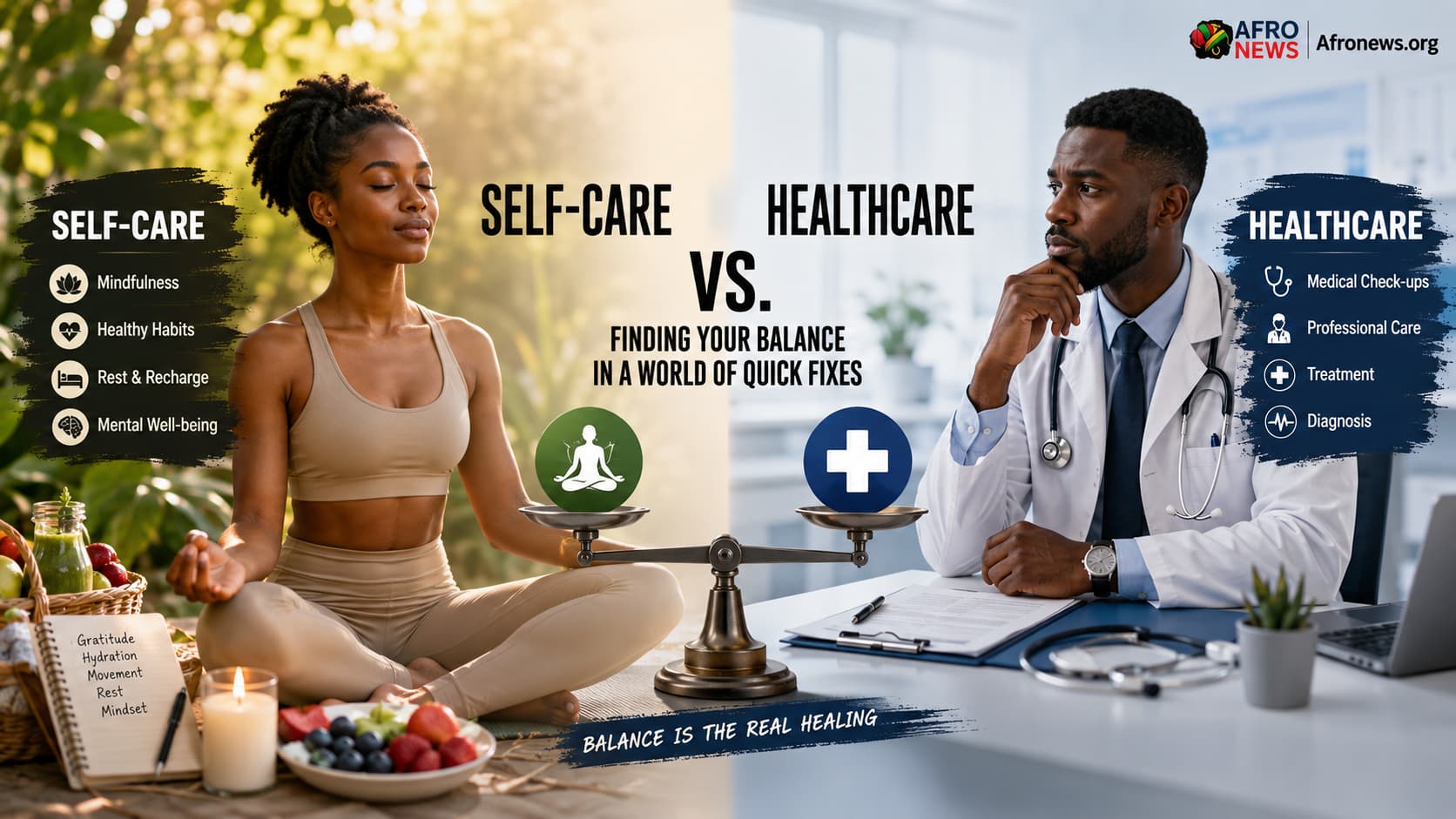
The line between self-care vs. healthcare has never been blurrier. Dietary supplements have become a norm, and millions turn to social media for medical advice. The global self-care market is booming. Trusted medical advisers such as the WHO position it as a key strategy for achieving universal health coverage.
But here’s the tension: self-care can be a powerful substitute for formal medical care. Some self-care users visit doctors less frequently, which can become a dangerous path to overmedicating and misinformation.
The big question is: How do you navigate self-care vs. healthcare without falling into traps?

Supplements: Help or Hype?
Supplements are a billion-dollar industry that sometimes promises vitality in a pill, sachet, drink, etc. Some supplements work—folic acid and probiotics have demonstrated benefits for specific conditions. Other supplements cause more harm than good, especially when knowledge on dosage and the correct time to take the supplements isn’t too specific.
This is not to say we should “avoid supplements”—it’s “be informed.”
In the self-care vs. healthcare debate, supplements belong firmly in the “with professional guidance” category.
Overmedicating:
Overmedication isn’t just about taking too many pills—it’s about taking the wrong combination. Some countries report that patients regularly take five or more medicines.
This is particularly dangerous when one drug causes side effects, so another is prescribed to treat them, leading to more side effects—and more drugs.
Regular medication reviews are essential, so regularly ask yourself, “Do I still need all of these?”
Social Media Doctors: Community vs. Misinformation
Patient influencers provide vital community for people who feel dismissed by doctors—a phenomenon called “medical gaslighting.” But misinformation is rampant.
Short-form videos are a mix of both physicians and misleading claims. Unfortunately, the misleading videos receive more likes than accurate ones.
When exploring self-care vs. healthcare online: Seek community, but verify clinical claims with licensed professionals.
AI Doctors
Users of AI medical advice struggle to know what information to provide. AI can give inconsistent answers and respond with a mix of good and bad advice—making it impossible for users to distinguish correct from incorrect.
AI is a tool for information gathering, not diagnosis.
Adapting Others’ Rituals: Why Personalization Matters
This is where self-care vs. healthcare becomes deeply personal. Wellness influencers share elaborate morning routines, supplement stacks, and ancestral healing practices. But adopting someone else’s rituals without considering your biomarkers, genetics, or lifestyle can make it less helpful and more dangerous.
Self-care is socially embedded—shaped by your networks, resources, and life stage. What works for a 25-year-old fitness influencer won’t work for a 55-year-old managing chronic illness.
Redefining Self-Care vs. Healthcare
Self-care isn’t a replacement for healthcare—it’s a complement. The WHO defines self-care as “the ability of individuals, families, and communities to promote health, prevent disease, and cope with illness… with or without the support of a healthcare provider.”
Practical Takeaways
Use social media for community and lived experience, not definite clinical decisions.
Never blindly use supplements. Get tested for deficiencies; consult a professional.
Schedule annual medication reviews.
AI tools are good for health literacy, not diagnosis or treatment plans.
Build your own routines based on your life; don’t just copy others’ elaborate protocols blindly.
The self-care vs. healthcare debate isn’t about choosing sides. It’s about understanding when to self-manage and when to seek professional support.
As one nursing scholar put it, effective self-care isn’t individual responsibility in isolation—it’s a socially embedded, relational process that requires collaboration across healthcare and community settings.
Listen to your body. Verify your sources. Remember: the best wellness ritual is the one that actually fits your life.