

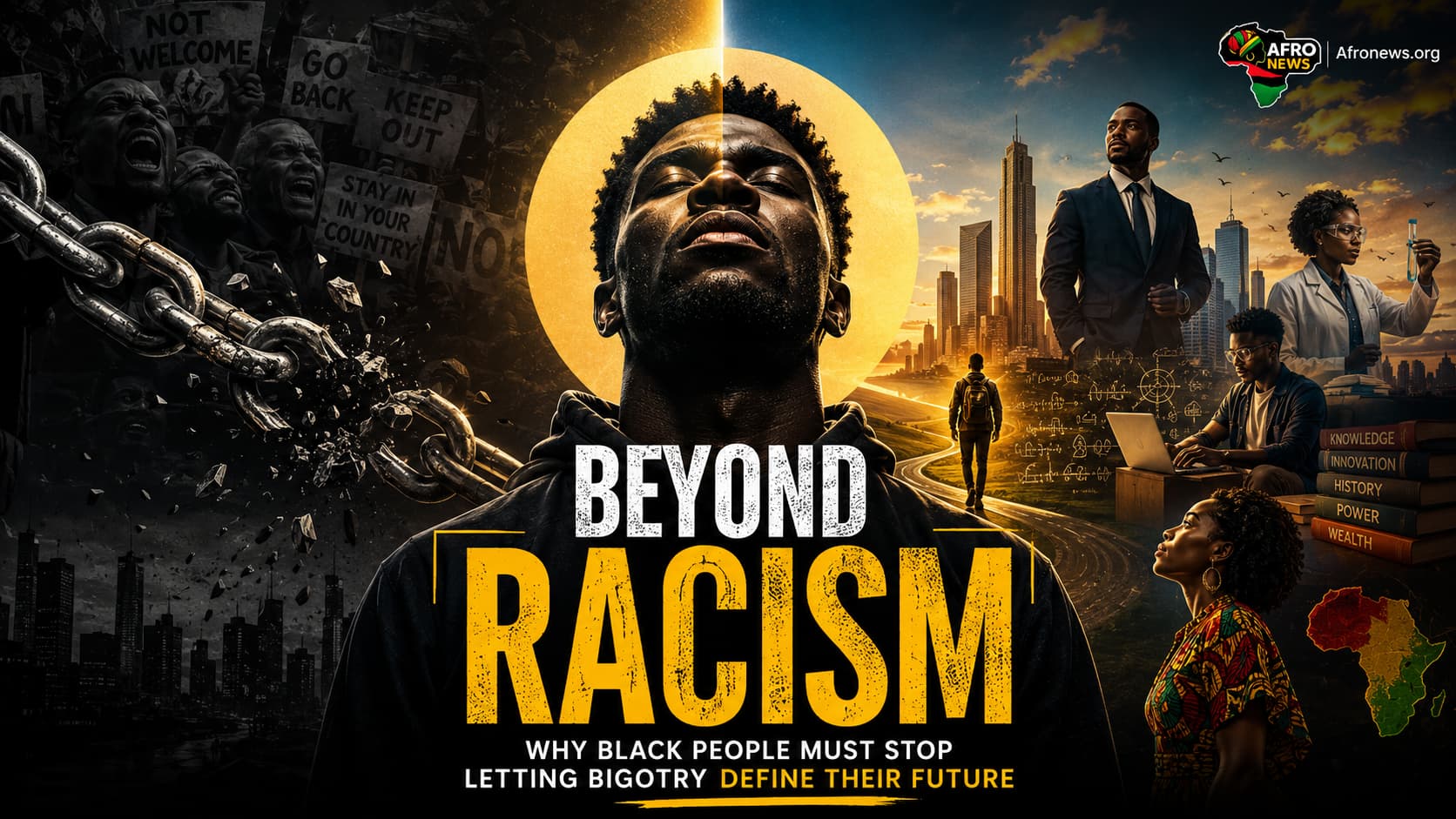
On a busy Moscow metro platform, an African student hears someone mutter a racial slur under their breath. He pauses briefly, shrugs, boards the train and continues to his university. His destination, a degree in engineering is far more important than the opinion of a stranger he will never meet again.
Across Russia, thousands of African students and professionals have built careers despite occasional experiences of prejudice. Many describe discrimination as unpleasant but refuse to let it derail their education, business ambitions or daily lives. Their response raises a difficult question:
What if the greatest victory over racism is refusing to let it dictate your life’s direction?
Related Post




This is not an argument that racism has disappeared. It plainly has not. Rather, it is a challenge to the growing tendency to make racism the central explanation for every setback experienced by Black people worldwide.
Perhaps the most radical act today is not endlessly confronting racism but refusing to let it occupy centre stage.
Racism Still Exists,But Does It Deserve Centre Stage?
History leaves little room for debate. Slavery, colonialism, apartheid and segregation shaped the modern world.
Yet history should inform the future not imprison it.
Today’s Black professionals lead Fortune 500 companies, head universities, govern nations, win Nobel Prizes, dominate global sports, influence entertainment and launch billion-dollar technology firms.
Their success did not require unanimous acceptance.
It required determination.
Why Constant Focus on Racism Can Become Counterproductive
Some psychologists argue that continuously expecting discrimination can become emotionally exhausting and reduce one’s sense of agency. Developing resilience, confidence and supportive communities can help individuals cope more effectively while still recognizing real injustices. American Psychological Association
None of this excuses racism.
But it suggests that constantly centering one’s identity around being a victim of racism can carry its own costs
Success Is the Loudest Rebuttal
History repeatedly shows that prejudice rarely disappears before progress begins.
Black entrepreneurs did not wait for every investor to abandon bias.
Scientists did not wait for every colleague to become enlightened.
Athletes did not wait for every fan to cheer.
They competed anyway.
Perhaps history’s greatest victories against prejudice were achieved not merely through protest but through excellence.
Not Every Insult Deserves a Battle
Social media has transformed every offensive remark into an international controversy.
Sometimes this is necessary.
Sometimes it simply amplifies the very voices seeking attention.
There are moments when ignoring a provocateur deprives them of the reaction they desire.
The challenge lies in distinguishing between individual acts of ignorance and systemic discrimination that requires collective action.
The Goal Was Always Freedom,Not Approval
The civil rights struggle sought equal rights, equal opportunity and equal dignity under the law.
It was never about ensuring that every individual abandoned prejudice.
A society can reduce discrimination through laws and institutions even while some individuals retain biased views.
Expecting universal approval from every stranger is unrealistic for anyone, regardless of race.
Build More Than You Protest
Communities advance by building businesses, schools, media platforms, research institutions and cultural influence.
Economic power often shapes public attitudes more effectively than endless arguments.
The future may belong less to those who win debates online and more to those who create jobs, own technology, tell compelling stories and educate the next generation.
Confidence Is Not Denial
Rejecting the idea that racism should dominate one’s thinking is not the same as denying racism exists.
Both truths can coexist:
- Racism remains a real problem in many societies.
- It does not have to become the defining feature of Black identity or ambition.
Choosing hope over bitterness does not erase injustice.
It simply refuses to let injustice determine one’s destiny.
The Real Question
Perhaps the question facing Black communities today is no longer whether racism exists.
The harder question is this:
How much power should we continue giving it over our dreams?
History may remember those who fought racism.
But it may remember even more those who built extraordinary futures despite it.
And if the next generation spends less time asking, “Who hates us?” and more time asking, “What can we create”?...could that become the most revolutionary response of all?
References
- American Psychological Association – Resilience Resources
- United Nations Human Rights – International Convention on the Elimination of All Forms of Racial Discrimination
- UNESCO – Combating Racism and Discrimination
- Pew Research Center – Research on Race and Ethnicity