
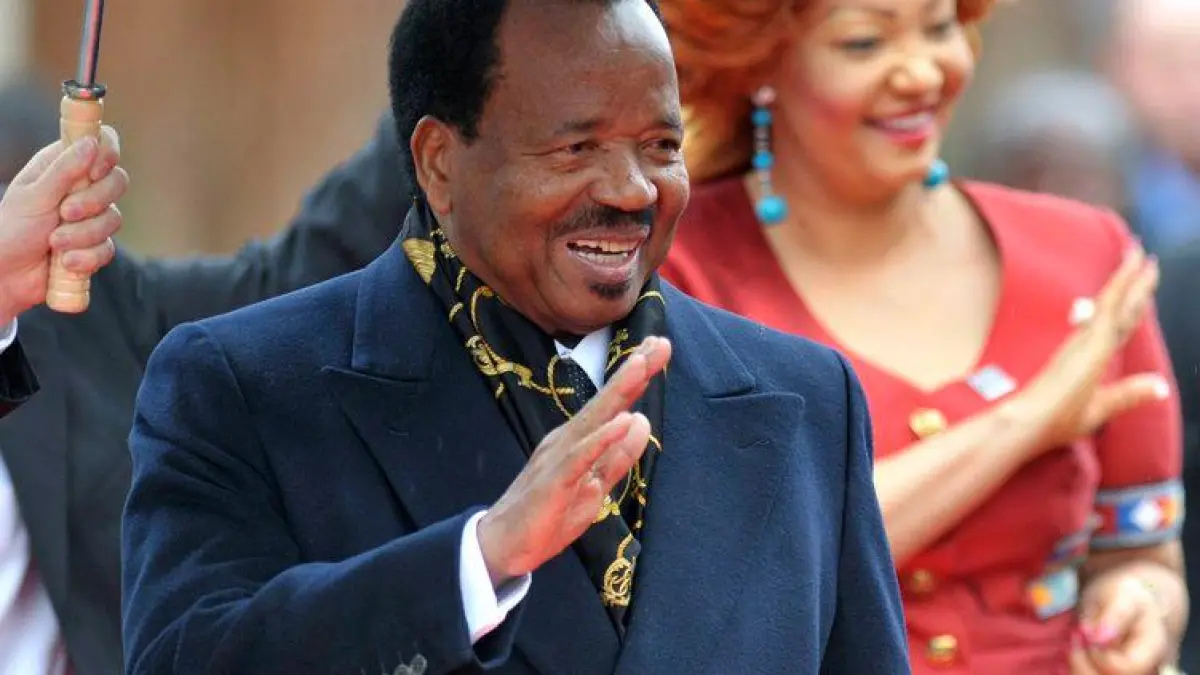
Cameroon. President Paul Biya is facing growing ‘biya geneva trip criticism’ after spending several weeks in Switzerland, raising questions about his health and the governance of the Central African nation.
According to an official statement, Biya left on 7th June for a “short, private stay” with his wife in Geneva. However, his extended absence has fuelled speculation and drawn sharp reactions from political opponents.
At 93, Biya is the world’s oldest head of state and has been in power for more than 40 years. His health has long been a subject of speculation, with the Cameroonian government repeatedly insisting that Biya is well. In June, Cameroon’s communication minister denied reports that the president had been hospitalised in Geneva, dismissing the claims as unfounded.
Related Post


Despite official reassurances, the biya geneva trip criticism continues to mount, with opposition figures and civil society groups demanding clarity on the president’s condition and whereabouts.
Biya Geneva Trip Criticism Intensifies Amid Health Speculation
Opposition figure Mamadou Mota has described Biya’s prolonged absence as a “glaring institutional vacuum,” warning that the president’s extended stay abroad undermines governance and leaves the country without decisive leadership.
The president of the Cameroon Democratic Union (UDC), Patricia Tomaino Ndam Njoya, has urged the government to set up “an impartial procedure for determining the temporary or permanent incapacity” of the head of state. Her call reflects growing unease among political stakeholders about the lack of a clear constitutional mechanism for handling presidential absence.
This is not the first time such accusations have been made. In late 2024, Biya faced similar biya geneva trip criticism over his 50-day absence from the country. Critics at the time questioned whether the president was fit to lead, and the latest trip has only reignited those concerns.
A Pattern of Extended Absences
Biya has made a series of trips to Geneva over the years, often for medical check-ups, though the government insists these are private visits. However, the frequency and duration of these trips have become a point of contention, particularly as Cameroon faces pressing security and economic challenges.
The biya geneva trip criticism has also drawn attention to the lack of constitutional provisions for presidential incapacity. Unlike many countries that have clear succession or temporary transfer of power mechanisms, Cameroon’s constitution offers limited guidance on what happens when the president is unable to perform his duties for an extended period.
What’s Next for Cameroon?
As Biya remains in Geneva, questions about his health and the future of Cameroon’s leadership continue to dominate political discourse. The government has sought to downplay concerns, but the growing biya geneva trip criticism suggests that public and political patience is wearing thin.
The situation highlights broader concerns about governance and succession in African countries where long-serving leaders have remained in power for decades without clear transition plans. Cameroon, like many nations on the continent, faces the challenge of balancing stability with democratic accountability.
Whether Biya’s latest Geneva trip ends soon or stretches on, the criticism underscores a fundamental concern: a nation cannot be governed effectively from afar, and its people deserve a leader who is present, accountable, and capable.
Analysis
The case of President Paul Biya raises important questions about leadership, accountability, and governance in Africa. While leaders deserve privacy regarding their health, prolonged absences without clear communication can erode public trust and create governance vacuums.
Cameroon’s constitution does not provide a clear procedure for determining presidential incapacity, leaving the nation in a precarious position. This is not a uniquely Cameroonian challenge, many African countries face similar gaps in constitutional provisions for leadership transitions.
As African nations continue to strengthen their democratic institutions, ensuring clear, transparent, and constitutional frameworks for leadership succession will be essential for long-term stability and public trust.
People Also Read: The Last Frontier of Liberation: Why Africa Must Decolonise the Mind