
For decades, Burkina Faso ranked among Africa’s leading gold producers, yet much of the wealth generated from its most valuable natural resource was realised beyond its borders. Gold was extracted from Burkinabè soil, transported overseas for refining, and sold on international markets with much of the value added elsewhere. The country supplied the raw material but captured only a fraction of the economic reward.
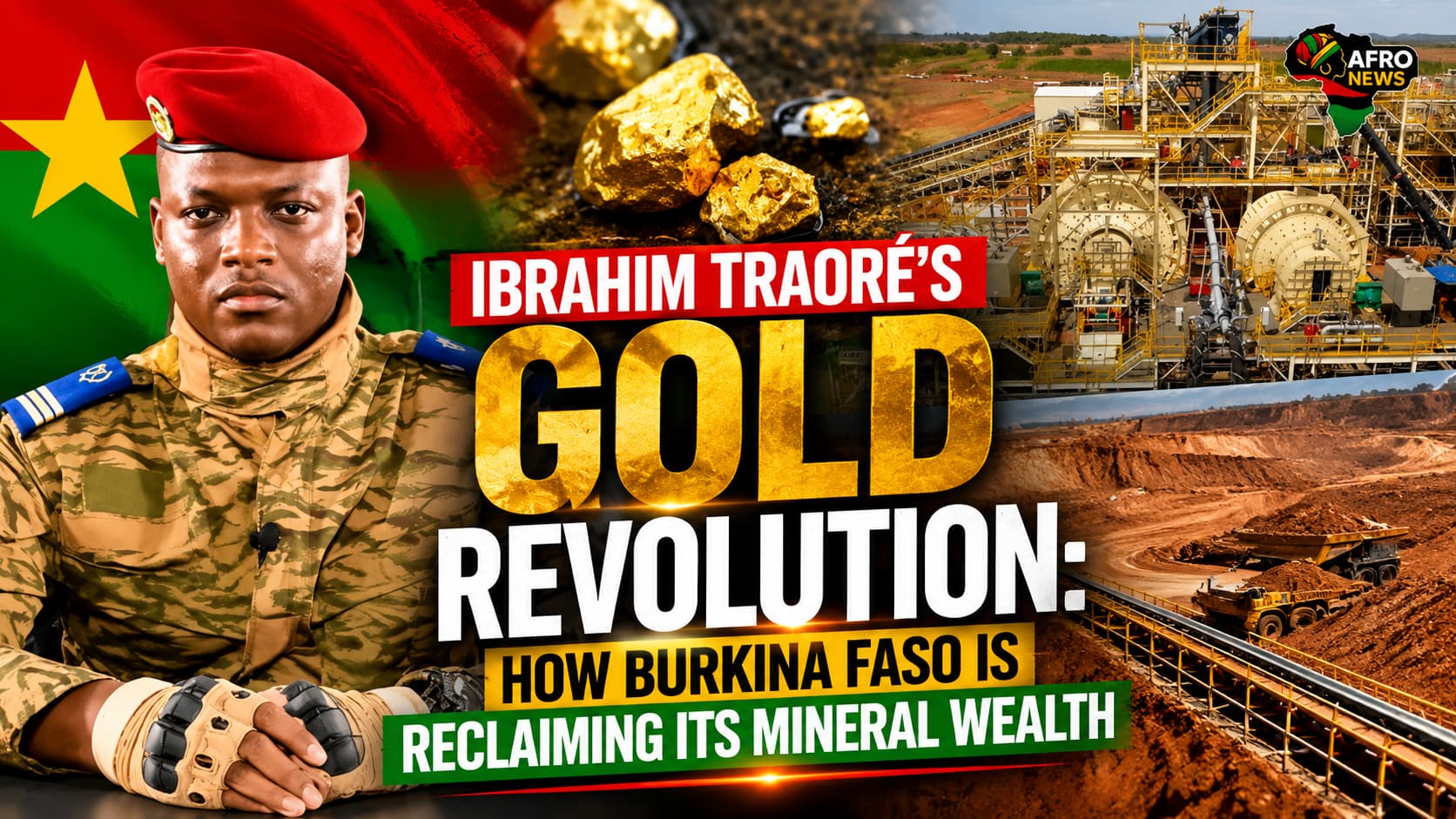
Since Captain Ibrahim Traoré assumed power in September 2022, his administration has pursued an ambitious policy aimed at changing that equation. Rather than merely increasing gold production, Ibrahim Traoré has sought to increase national ownership, strengthen state participation, and move Burkina Faso further up the mining value chain. Whether viewed as economic nationalism or resource sovereignty, the reforms represent one of the most significant restructurings of the country’s mining sector in recent history.
The clearest demonstration of Ibrahim Traoré‘s policy came in 2024 when Burkina Faso acquired the Boungou and Wahgnion gold mines from London-listed Endeavour Mining and transferred them to the state-owned mining company, Société de Participation Minière du Burkina (SOPAMIB). The government described the move as part of a broader strategy to ensure that the country’s mineral wealth contributes more directly to national development. (Reuters)
Related Post


That strategy did not end with two mines.
In April 2025, Prime Minister Jean Emmanuel Ouédraogo announced that Burkina Faso intended to nationalise additional industrial mines, arguing that the country must obtain a greater share of the revenues generated by its natural resources. The policy followed the adoption of a revised mining code and the creation of SOPAMIB, both designed to increase state participation in the mining industry. By June 2025, a presidential decree had completed the transfer of five mining assets, including two producing mines and three exploration licences, to the state-owned company. These reforms further reinforced Ibrahim Traoré’s vision of expanding national control over strategic resources. (Reuters)
Ownership, however, is only one part of the story.
Perhaps the most transformative reform under Ibrahim Traoré has been Burkina Faso’s decision to establish its first national gold refinery. For decades, despite producing substantial quantities of gold, the country lacked domestic refining capacity. As a result, raw gold was exported for processing abroad, allowing other economies to capture much of the additional value created through refining, certification, and downstream industries.
The government’s refinery project is intended to reverse that pattern by enabling Burkina Faso to process more of its gold domestically. Beyond increasing government revenue, the refinery is expected to strengthen industrial capacity, improve traceability, create skilled employment, and reduce dependence on foreign processing facilities. Reuters reported that the project forms a central pillar of the government’s broader effort to retain more value from its natural resources within the national economy. (Reuters)
The reforms have extended to artisanal mining as well.
In February 2024, Burkina Faso suspended the issuance of export permits for small-scale gold production. Authorities said the decision was intended to combat illicit gold exports, reduce smuggling, improve regulatory oversight, and ensure that more gold enters formal trading channels where taxes and royalties can be collected transparently. The move complements Ibrahim Traoré’s broader strategy to strengthen oversight across the entire mining sector. (Reuters)
Together, these measures illustrate a broader shift in economic policy. The government’s objective is no longer limited to extracting gold; it seeks to control a larger share of the industry’s entire value chain, from licensing and production to refining and export.
Supporters argue that Ibrahim Traoré’s reforms could allow Burkina Faso to retain a greater proportion of the wealth generated from its natural resources, strengthen domestic industries, and reduce historical dependence on foreign mining companies. Critics, however, caution that expanding state ownership must be accompanied by sound governance, transparency, and efficient management to maintain investor confidence and ensure long-term sustainability. (Reuters)
Ultimately, the success of Ibrahim Traoré‘s reforms will not be measured solely by the number of mines under state control or by changes in mining legislation. Their true legacy will depend on whether the additional value generated from Burkina Faso’s gold industry translates into better schools, stronger healthcare systems, modern infrastructure, sustainable employment, and improved living standards for ordinary Burkinabè citizens.
Burkina Faso’s experiment is still unfolding, and history has yet to deliver its final verdict. Yet one reality is already evident: Ibrahim Traoré has placed resource sovereignty at the centre of Burkina Faso’s development agenda. Rather than remaining simply a producer of raw materials, the country is striving to become a nation that owns, processes, and derives greater benefit from its own natural wealth.
For many observers across Africa, the reforms associated with Ibrahim Traoré represent more than an economic strategy, tthey reflect a growing belief that Africa’s natural resources should increasingly serve the development and prosperity of the people who own them.
References
Reuters. (2025, April 29). Burkina Faso to nationalise more industrial mines, prime minister says.
https://www.reuters.com/world/africa/burkina-faso-nationalise-more-industrial-mines-prime-minister-says-2025-04-29/
Reuters. (2025, June 12). Burkina Faso completes nationalisation of five gold mining assets.
https://www.reuters.com/world/africa/burkina-faso-completes-nationalisation-five-gold-mining-assets-2025-06-12/
Endeavour Mining. (2024). Official company announcements and information on Boungou and Wahgnion mines.
https://www.endeavourmining.com/