
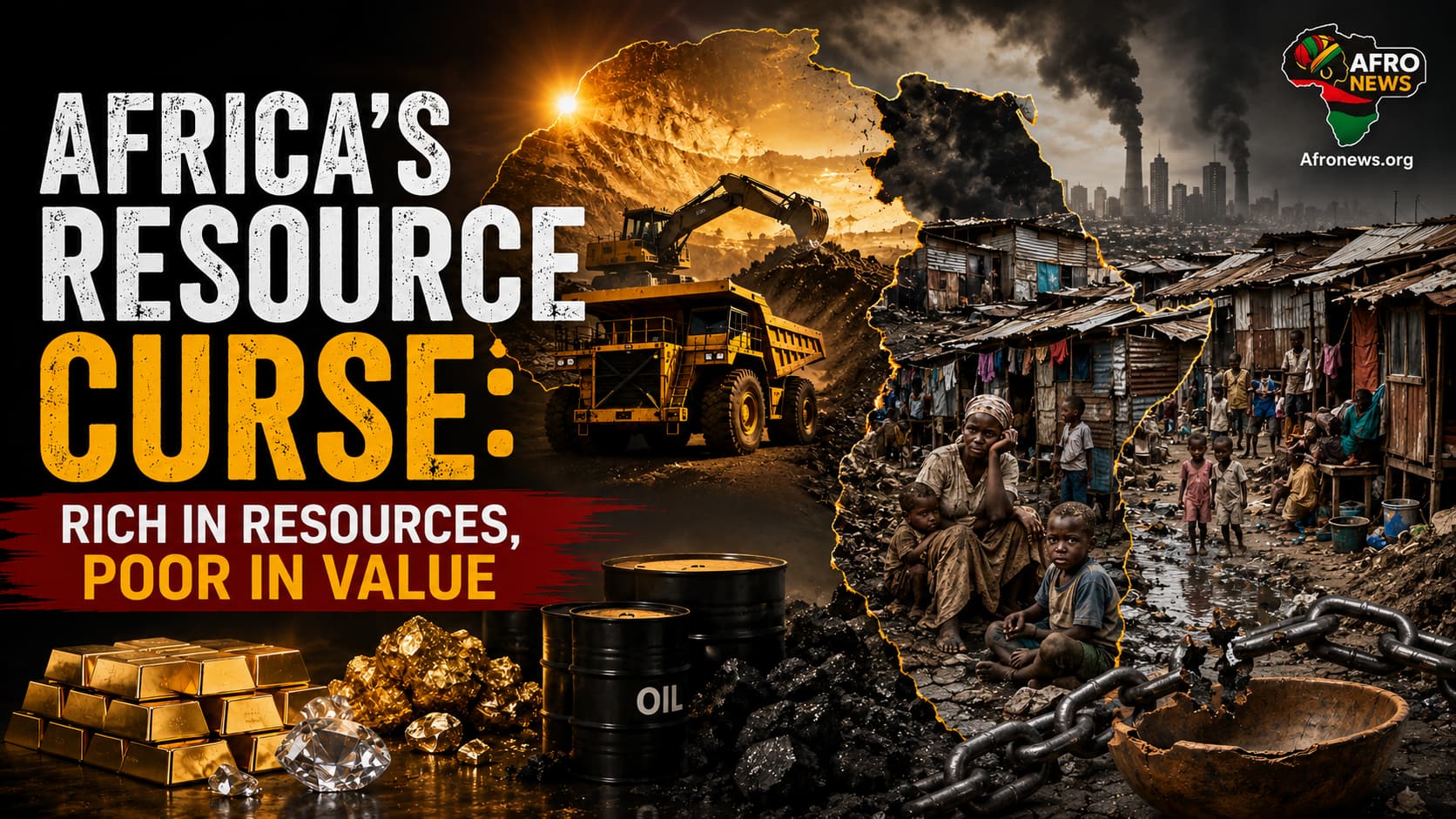
Africa is not poor because it lacks resources.
It is poor because it has struggled to turn resource wealth into shared prosperity.
The Democratic Republic of Congo possesses enormous reserves of cobalt and other critical minerals. Guinea is a global bauxite powerhouse. South Africa is rich in platinum-group metals. Ghana has gold. Nigeria has oil. Zambia has copper. Across the continent, the earth is generous.
Related Post



But generosity from nature does not automatically produce prosperity.
That is Africa’s resource curse.
The World Bank estimates that resource-rich African countries capture only about 40% of the revenue they could potentially collect from their natural resources. The problem, therefore, is not simply extraction. It is governance, revenue management, economic diversification and the failure to convert natural wealth into productive investment. (World Bank)
And here lies the irony:
Africa often exports what the world needs and imports what Africa could have produced.
Cobalt leaves the Congo. Batteries and advanced technologies generate much more value elsewhere.
Bauxite leaves Africa. Aluminium and manufactured products create value further down the chain.
Minerals leave the continent. Finished products return at much higher prices.
UN Trade and Development warns that African countries possess major shares of critical minerals but remain limited in processing and value addition. In 2023, Africa supplied about 12% of global mineral exports but captured only around 4% of the value in green supply chains. (UNCTAD)
The resource is African. The bigger share of the value often is not.
This is where leadership matters.
Good leadership is not simply about winning elections, giving speeches or negotiating another mining agreement. It is about building institutions that can negotiate better contracts, collect fair revenues, enforce transparency and invest resource income in education, infrastructure, technology and industries that survive beyond political administrations.
The African Development Bank now places governance, transparency, local processing, industrialisation and diversification at the centre of its natural-resource strategy. (African Development Bank)
But blaming African leaders alone would also be too easy.
The system is bigger than the presidential palace.
International companies seek profitable resources. Global markets determine commodity prices. Foreign capital finances projects. Consumers around the world demand minerals for phones, vehicles and renewable technologies. African governments negotiate within this global system—sometimes from a position of strength, sometimes from weakness.
And history matters.
Colonial economies were largely designed around extraction and export. Independence changed the flags, but many countries inherited economies still heavily dependent on exporting raw commodities.
The challenge today is to change the model.
Africa must stop asking only, “How much can we extract?” and start asking, “How much can we create?”
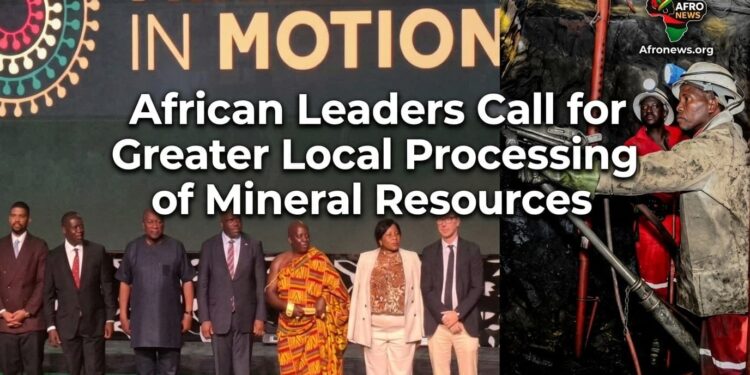
That means moving from mines to processing plants.
From raw minerals to manufactured products.
From commodity exports to industrial value chains.
From temporary resource revenues to permanent national wealth.
The opportunity is enormous. UNCTAD estimates that Africa holds significant shares of minerals critical to the global energy transition, including cobalt, manganese, graphite, copper and lithium. The question is whether the continent will simply supply the green revolution, or help manufacture it. (UNCTAD)
This is why the debate about Africa’s resource curse must go beyond the familiar argument that “Africa has bad leaders.”
Leadership matters.
But institutions matter.
Global markets matter.
History matters.
And value addition matters.
Africa does not need the world to stop buying its resources.
Africa needs to become better at deciding what those resources are worth, and capturing more of that value.
The continent does not need another century of exporting potential.
It needs to turn its mineral wealth into factories, its revenues into human capital, and its natural resources into opportunities for its people.
Africa is not empty.
Africa is not helpless.
And Africa is certainly not without wealth.
The real question is simple: when the resources leave Africa, how much of the wealth comes back?
That is the question at the heart of Africa’s resource curse.
And perhaps breaking that curse begins when Africa stops measuring its wealth by what lies beneath the ground, and starts measuring it by what it can build above it.
References
African Development Bank. (2025). Natural resources management and investment action plan 2025–2029. African Development Bank
United Nations Conference on Trade and Development. (2025). Critical minerals supply chains: Trade flows and value addition. UN Trade and Development
United Nations Conference on Trade and Development. (2025). SDG Pulse 2025: Critical minerals. UN Trade and Development
United Nations Conference on Trade and Development. (2025). Unlocking value: Helping African economies diversify beyond raw minerals. UN Trade and Development
World Bank. (2023, May 9). Maximizing revenues from natural resource wealth could yield big fiscal and environmental dividends for African countries. World Bank