

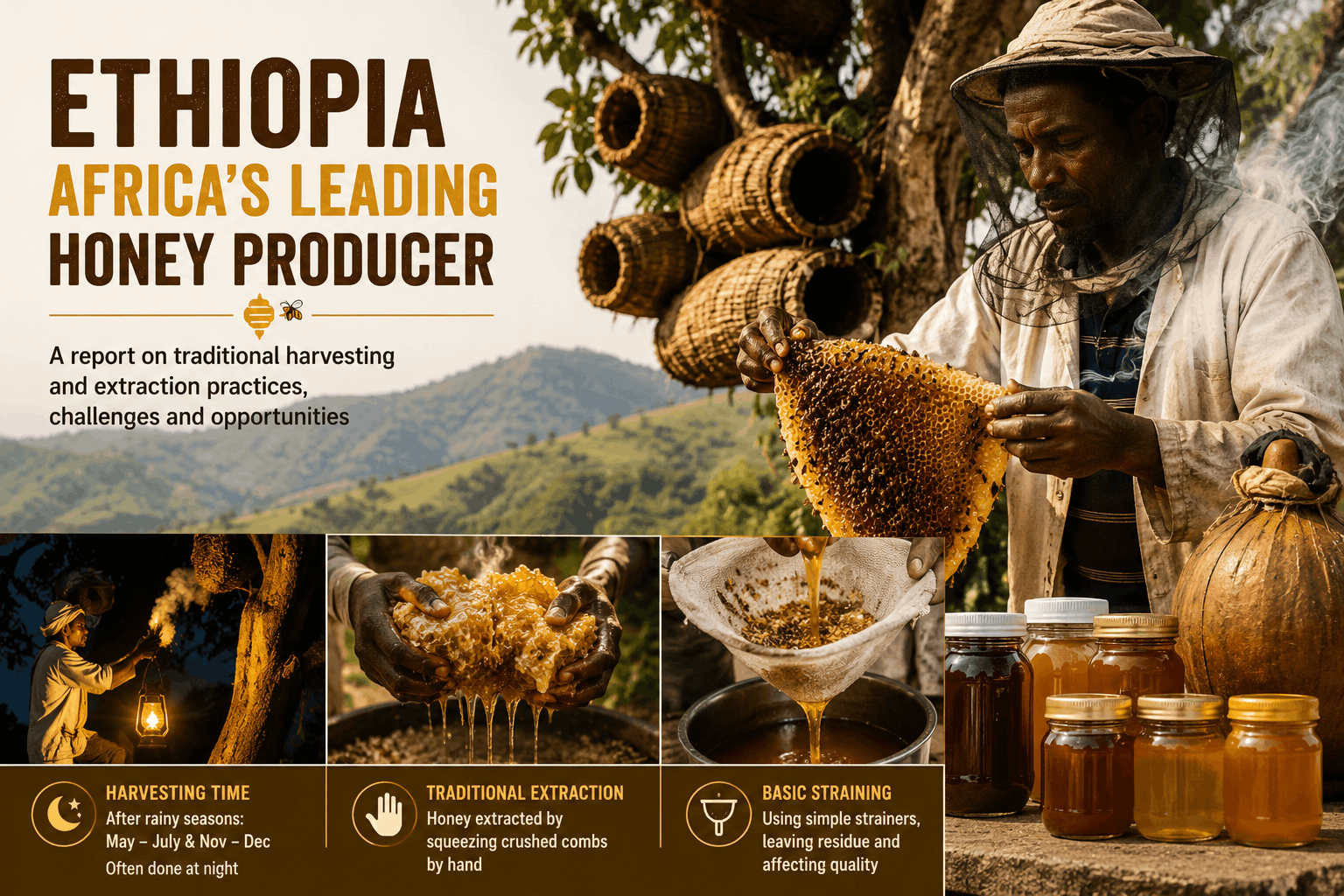
Ethiopia is Africa’s largest honey producer, accounting for more than 20 percent of the continent’s total honey output. Annual production is estimated at between 250,000 and 326,000 tonnes, making the country one of the world’s leading honey producers. The traditional honey harvesting in Ethiopia makes them unique in history.
Despite advances in modern agriculture, Ethiopian beekeeping remains largely traditional. Around one million households depend on honey production for income, making it an important source of livelihood in rural communities. The industry combines centuries-old knowledge with practices that have been passed down through generations.
The Harvesting Season
Honey harvesting in Ethiopia follows the country’s rainy seasons. The main harvest usually takes place between May and July, while a second harvest occurs between November and December.
Related Post




Many beekeepers harvest honey at night when bees are less active. This reduces the risk of stings and minimizes stress on the colonies. Working in darkness requires experience and a deep understanding of bee behaviour, skills that are often learned from older generations.
Traditional Hives and Harvesting Methods
Most Ethiopian honey comes from traditional cylindrical hives made from local materials such as hollowed logs, woven bamboo, straw, or clay. These hives are commonly hung in trees or placed on wooden platforms.
Before harvesting, beekeepers use smoke produced from dried plant materials or cow dung to calm the bees. The smoke encourages a feeding response, making the insects easier to manage during collection.
Once the hive is opened, honey-filled combs are removed by hand. The process is labour-intensive but remains popular because traditional hives are inexpensive to build and maintain.
Traditional Honey Harvesting in Ethiopia
In many rural areas, honey extraction is still done manually. Harvested combs are crushed and squeezed by hand to release the honey. Another common method involves placing crushed combs inside a cloth or simple sieve, allowing the honey to drain into a collection container.
While these methods are affordable and widely used, they can leave small particles of wax, pollen, and other natural residues in the final product. Although these impurities do not affect the flavour, they can reduce the honey’s appeal in international markets, where buyers often prefer clear, filtered honey.
Why Ethiopian Honey Matters
Ethiopia’s rich biodiversity contributes to the unique qualities of its honey. Different regions produce honey with distinct colours, aromas, and flavours, making Ethiopian honey highly valued both locally and abroad.
Honey also plays an important role in Ethiopian culture. It is the main ingredient in tej, a traditional honey wine served during weddings, religious celebrations, and other important occasions. Made from honey, water, and the local gesho plant, tej remains a cherished part of Ethiopian heritage.
Beyond its cultural significance, beekeeping provides income for rural families, helping to cover essential expenses such as food, education, and healthcare. The sector also offers opportunities for women and young people because it requires relatively little land and investment.
The Future of Ethiopian Honey
Efforts are underway to improve honey quality and increase export opportunities. Development organizations and agricultural programs are introducing modern extraction equipment and training to help reduce contamination and meet international standards.
However, traditional methods remain deeply valued by many beekeepers. As Ethiopia continues to lead Africa in honey production, the industry represents a balance between preserving cultural heritage and embracing modern improvements.
Traditional honey harvesting in Ethiopia is more than a means of production. It is a centuries-old practice that supports livelihoods, strengthens communities, and reflects the country’s rich agricultural traditions. As global demand for natural honey continues to grow, Ethiopia’s beekeepers remain at the heart of one of Africa’s most important and enduring industries.