
When Artificial Intelligence Becomes a Weapon: How Boko Haram Is Rewriting the Rules of Modern Terrorism
Artificial Intelligence (AI) has long been celebrated as humanity’s next great breakthrough powering medical discoveries, transforming education, revolutionising businesses and reshaping economies.
But what happens when the same technology designed to improve human life begins to empower those determined to destroy it?
Related Post




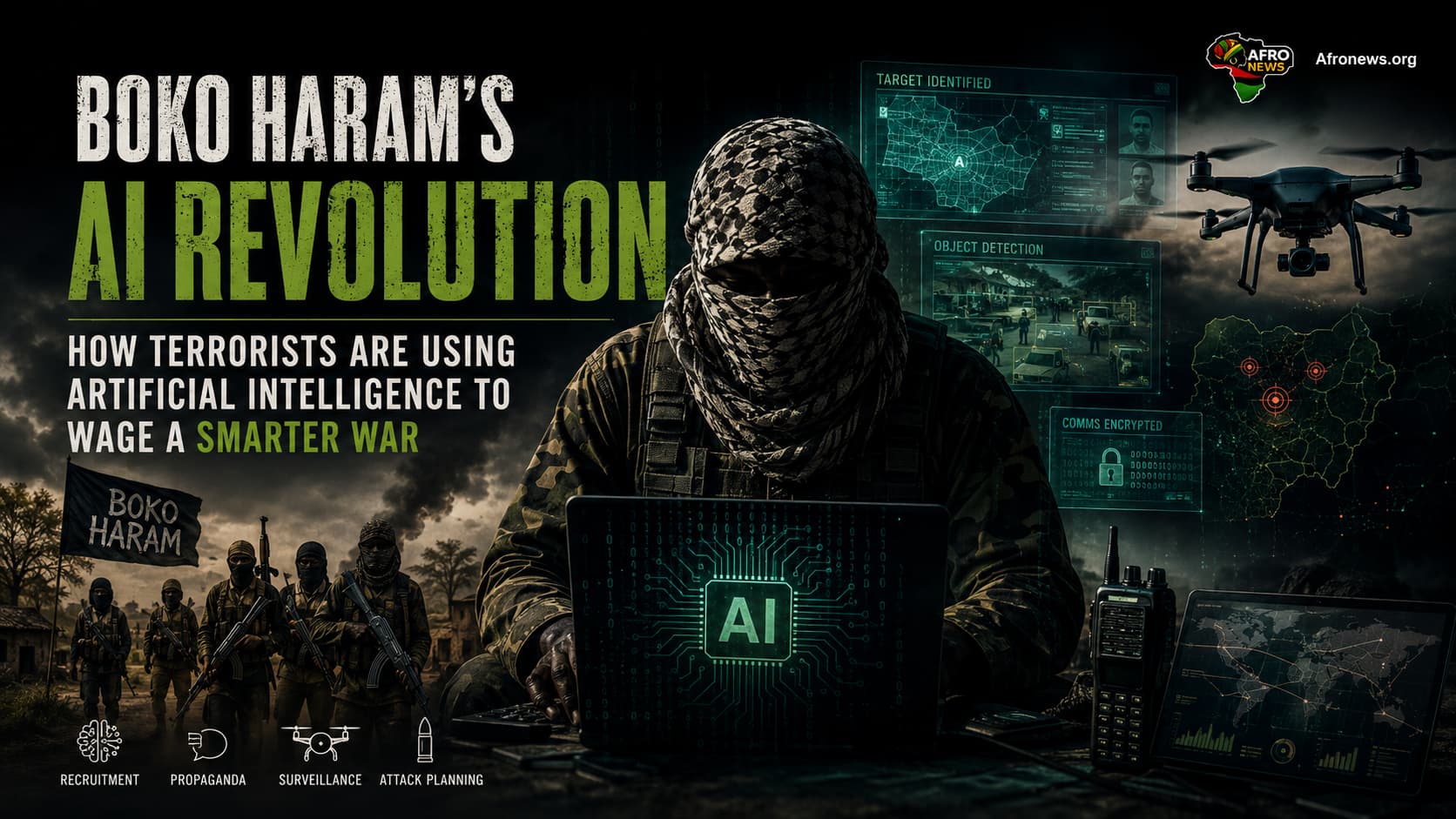
That question is becoming increasingly urgent after a new study revealed that Boko Haram and its splinter faction, the Islamic State West Africa Province (ISWAP), are systematically using artificial intelligence to improve their operations, marking what security experts describe as a dangerous evolution in modern terrorism.
A New Digital Battlefield
For over 16 years, Nigeria has battled one of Africa’s deadliest insurgencies. Throughout that period, terrorist groups have evolved from using propaganda videos and encrypted messaging apps to deploying drones and sophisticated communication networks.
Now, according to research led by Cambridge University-affiliated security researcher Antonia Juelich, AI has become the latest weapon in their arsenal.
The study, based on interviews with former Boko Haram and ISWAP members, found that the groups have reportedly institutionalised AI by creating specialised units and training fighters to use advanced AI chatbots as operational tools.
Rather than relying solely on conventional internet searches, militants reportedly turned to AI platforms including ChatGPT, Claude, Gemini, Grok, Meta AI and DeepSeek to solve battlefield problems, analyse captured weapons, improve tactical planning and enhance operational efficiency.
Technology Without Morality
The report suggests AI was allegedly used to troubleshoot malfunctioning weapons, refine battlefield tactics and improve explosive devices.
Former militants interviewed for the study claimed AI even helped fighters develop solutions for crossing military trench defences by modifying motorcycles after analysing practical scenarios.
While many of these claims are based on interviews with former members and cannot be independently verified in every instance, the research represents one of the first detailed field studies documenting how an active terrorist organisation may be integrating frontier AI into its operations.
A Warning Beyond Nigeria
The implications stretch far beyond Nigeria’s borders.
For years, security agencies have worried about terrorists using social media for recruitment and propaganda. The latest findings suggest the next phase could involve AI serving as a digital battlefield adviser,helping extremists learn faster, adapt quicker and innovate more efficiently.
Researchers warn that although AI companies have introduced safeguards to prevent misuse, determined actors may still attempt to circumvent those protections, exposing the need for stronger security measures and international cooperation.
For Africa, where violent extremism continues to threaten stability in parts of the Sahel, the Lake Chad Basin and the Horn of Africa, the emergence of AI-assisted terrorism presents an entirely new security challenge.
The Bigger Question
Every generation is defined by the technologies it creates.
Fire could warm a home or burn a city. Nuclear science could power nations or erase them. Artificial intelligence now joins that list of transformative inventions whose impact depends entirely on the hands that control it.
The greatest danger may not be that machines are becoming more intelligent.
It may be that human wisdom is not keeping pace.
As governments race to unlock AI’s economic potential, they must also confront a darker reality: the same algorithms driving innovation could become the invisible engines of the next generation of terrorism.
If today’s terrorists can learn from artificial intelligence, what happens when tomorrow’s terrorists begin to command it?
That question may determine not only the future of Nigeria’s security but the future of global peace.
Because the next great war may not begin with the sound of gunfire. It may begin with the click of a prompt.
References
- Cambridge Programme on AI Science & Policy report: “God has helped us, and so will AI”: How the Terrorist Group Boko Haram Uses Frontier AI
- Research profile of Antonia Juelich: Antonia Juelich
- AFP report on the study: From Bombmaking to Motorcycle Tweaks: How Nigerian Jihadists Use AI